
Dr Linia Patel (PhD), RD explores eating for ADHD to give the brain the best chance to thrive.
As an 80’s baby, when I was at school, there were usually one or two children in each class who were thought to have ADHD. Fast-forward to now and it’s a much more common part of conversations – whether among parents navigating children’s diagnoses or women in menopause describing how their ADHD symptoms seem to intensify. Awareness has grown enormously and I’ve had to do my own homework to keep up with the science.
In the UK, around 2.6 million people are thought to have attention deficit hyperactivity disorder (ADHD) – that’s 708,000 children and 1.9 million adults. Demand for assessments is high, with almost 200,000 people currently on waiting lists for adult ADHD evaluations.
What is ADHD?
ADHD is defined in slightly different ways depending on the organisation, but the DSM-5 describes it as a behavioural condition marked by persistent patterns of inattention, impulsivity and hyperactivity. Many of us experience these behaviours from time to time, but in ADHD they are more severe, occur more often and interfere with school, work or social life. Importantly, ADHD is not just about challenges. Each person with ADHD has a unique profile – and many have exceptional strengths, creativity and problem-solving abilities that deserve recognition.
Why ADHD?
The truth is, there isn’t a single ‘why’. ADHD doesn’t have one identifiable cause. Instead, multiple factors likely interact, including:
- Genetics– certain inherited genes are strongly linked
- Early exposures– factors during pregnancy and early childhood may contribute
- Brain differences– studies suggest lower neurotransmitter levels in the frontal lobe, reduced volume in the basal ganglia or differences in cerebral cortex thickness.
While we can’t change genes, we do know that environment and lifestyle can play a powerful role in how ADHD symptoms are expressed and managed.
ADHD and menopause: The hormonal link
Many women tell me their ADHD symptoms feel worse during the menopause transition – and there’s science to back that up. Oestrogen and progesterone, two key female hormones, play important roles in the brain. Oestrogen, in particular, helps regulate dopamine and serotonin – the same neurotransmitters that are central to ADHD. When oestrogen levels fluctuate and decline during perimenopause and menopause, it can reduce dopamine activity, making inattention, forgetfulness and emotional regulation even harder.
Progesterone also influences GABA, a calming brain chemical. When progesterone falls, women may experience more restlessness, anxiety and sleep disruption – all of which can exacerbate ADHD symptoms. In practice, some women first seek ADHD assessments during midlife because their symptoms suddenly feel unmanageable, yet others who have long managed their ADHD well may find they notice a significant increase in challenges with focus, memory and mood during perimenopause.
Management of ADHD
Once diagnosed, treatment often includes medication – particularly for children over five and adults. The most prescribed are stimulants such as amphetamines and methylphenidate, which work by boosting dopamine and norepinephrine levels in the brain. These are highly effective for many people. Educational and behavioural strategies are also recommended. But what’s often underemphasised is lifestyle – and that includes what we put on our plates.
Why diet matters
Your brain is always ‘on’. It controls thoughts, mood, movement, breathing, heartbeat – everything. Yet, for years, the link between nutrition and brain health was overlooked.
Now, with the rise of nutritional psychiatry, we understand that diet is a modifiable factor in how the brain grows, matures and functions.
- Structurally, the brain is 60% fat, with the rest made up of water, protein, carbohydrates, micronutrients and salts.
- Different brain regions have different compositions – the grey matter, for example, is up to 80% water.
For individuals with ADHD – whose brains often work overtime – the right nutrition is essential. Without adequate fuel, or when fuel comes in the wrong form, the brain simply won’t perform at its best.
Nutrition & ADHD: Key considerations
-
Stay well hydrated
Brain cells rely on a precise balance of water and electrolytes. Dehydration disrupts this balance, slowing thinking and worsening concentration. Children are especially vulnerable because their ‘thirst cues’ are less developed.
Tip: Use urine colour as a guide – aim for pale straw after your first morning trip to the bathroom. Prioritise water over sugary or flavoured drinks.
-
Eat a balanced diet
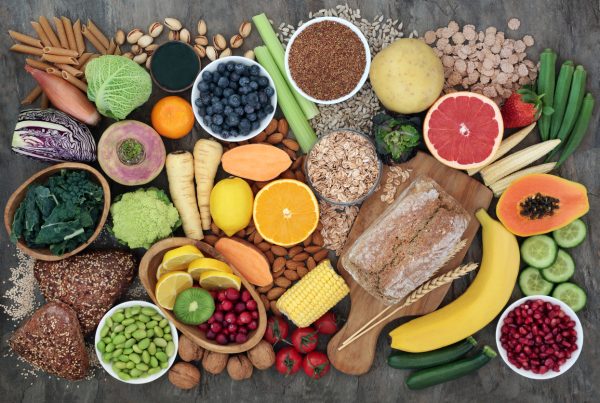
An ADHD-friendly diet follows the same principles as general good nutrition:
- Fruits and vegetables – for vitamins, minerals and phytonutrients.
- Whole grains – to provide steady-release carbohydrates (the brain’s main energy source).
- Lean proteins – especially important at breakfast, as they can support mood, attention and alertness.
- Healthy fats – from fish, nuts, seeds and oils.
Remember: The brain cannot store energy – it needs a steady, reliable supply.
-
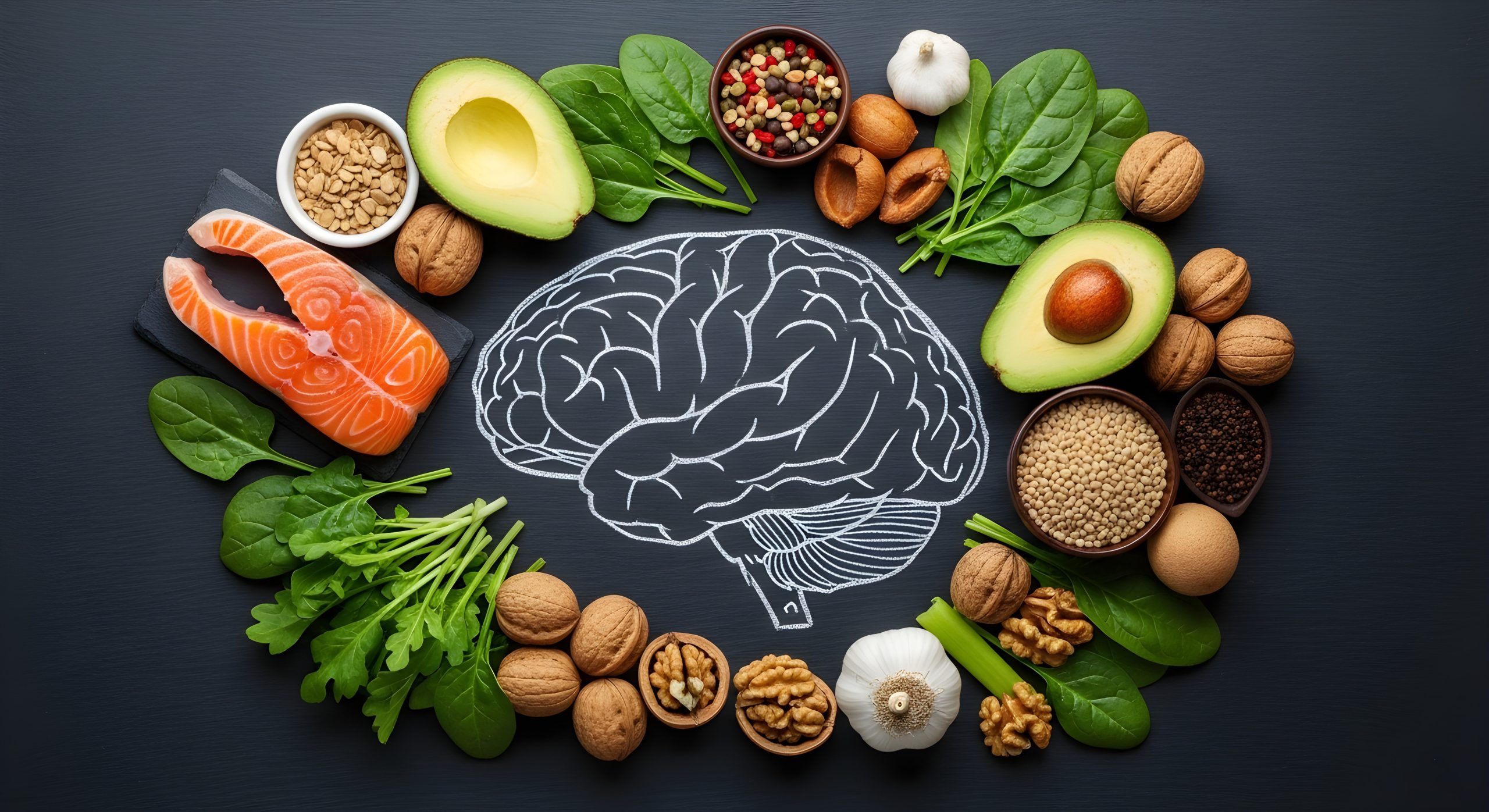
Focus on omega-3 fatty acids
The fatty myelin sheath that insulates brain neurons is rich in omega-3 fatty acids, particularly DHA (docosahexaenoic acid). Low levels are linked to poorer memory and learning.
Tip: Aim for oily fish twice a week or daily plant-based omega-3 sources such as flaxseeds, chia seeds, walnuts or seaweed.
-
Go easy on sugar and ultra-processed foods
The relationship between sugar and ADHD symptoms remains debated. Some studies find no link; others suggest high sugar intake is associated with greater inattention and impulsivity. What we do know is that people with ADHD are at a higher risk of weight gain, partly due to diet and lifestyle patterns. Reducing ultra-processed foods and added sugars is generally wise.
Tip: Current guidance for children is no more than six teaspoons (25g) of added sugar daily.
-
Lean into micronutrients and phytonutrients
Certain nutrients appear especially important for ADHD brains: choline, vitamin D, iodine, iron and magnesium. At the same time, the colourful plant compounds in fruit and veg – phytonutrients – play key roles in protecting the brain and optimising function.
Tip: Aim for ‘eating the rainbow’ each day.
Supplements: What we know
There’s no single supplement that ‘fixes’ ADHD but some have been studied with interesting results:
- Fish oil (omega-3s): Linked to small improvements in symptoms.
- Ginkgo biloba: May support blood flow and neurotransmitter activity, with mild benefits.
- L-carnitine & acetyl-L-carnitine: Involved in brain energy production and dopamine signalling, with some evidence of benefit.
Supplements should never replace a balanced diet but, in certain cases, they may provide an additional layer of support.
Final thoughts
There is no one-size-fits-all ‘ADHD diet’. But the science is clear: nutrition matters for brain health. By focusing on hydration, balance, omega-3s, reducing ultra-processed foods and prioritising micronutrient-rich foods, we can give the ADHD brain the best chance to thrive.
Explore more resources for working with ADHD, in this blog on how to train clients with neurodiversity.
References
- Derbyshire E (2017),Nutrition for ADHD and dyslexia: Unlocking the potential for learning and wellbeing, Jessica Kingsley Publishers.
- com. ADHD. https://examine.com/outcomes/adhd-symptoms/
- Zeng YC, Li SM, Xiong GL, Su HM & Wan JC (2011), Influences of protein to energy ratios in breakfast on mood, alertness and attention in the healthy undergraduate students, Health, 03(06): 383-93.
- Derbyshire E (2017), Do omega-3/6 fatty acids have a therapeutic role in children and young people with ADHD?Journal of Lipids, 6285218.
- Beecher K, Alvarez Cooper I, Wang J, Walters SB, Chehrehasa F, Bartlett SE, Belmer A (2021), Long-term overconsumption of sugar starting at adolescence produces persistent hyperactivity and neurocognitive deficits in adulthood, Frontiers in Neuroscience, 15.
- Widenhorn-Müller K, Schwanda S, Scholz E, Spitzer M, Bode H (2014), Effect of supplementation with long-chain ω-3 polyunsaturated fatty acids on behavior and cognition in children with attention deficit/hyperactivity disorder (ADHD): A randomized placebo-controlled intervention trial, Prostaglandins, Leukotrienes and Essential Fatty Acids, 91(1-2): 49-60.
- Bruton A, Nauman J, Hanes D, Gard M, Senders A (2021), Phosphatidylserine for the treatment of pediatric attention-deficit/hyperactivity disorder: A systematic review and meta-analysis, Journal of Alternative and Complementary Medicine, 27(2): 138-48
- Van Oudheusden LJ & Scholte HR (2002), Efficacy of carnitine in the treatment of children with attention-deficit hyperactivity disorder, Prostaglandins, Leukotrienes and Essential Fatty Acids, 67(1): 33-38.