

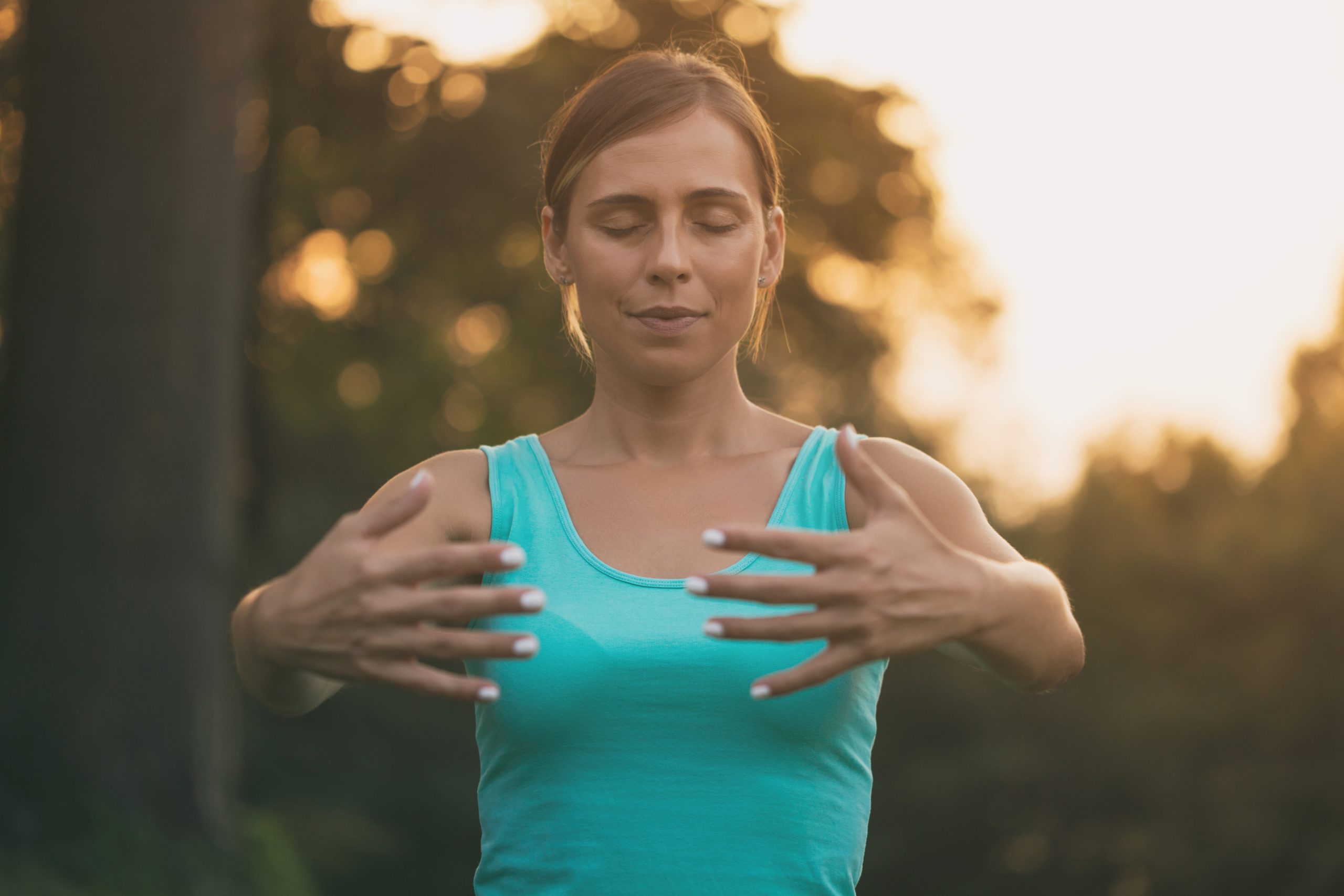
Tai chi, qigong and biophilia: Mark Peters delivers a practical mental health strategy centred on the innate human tendency to seek connection with nature and other living systems, also known as biophilia.
As fitness professionals, we’re increasingly working with clients who aren’t just looking to get stronger or fitter – they’re looking to feel better. Anxiety, chronic stress and low mood are now part of the landscape we operate in.
The challenge is that traditional fitness models don’t always address these needs effectively.
High-intensity training, performance-driven goals and aesthetic outcomes all have their place. But for clients dealing with anxiety or depression, these approaches can sometimes reinforce the very dysregulation we’re trying to reduce.
What’s needed is a broader toolkit – one that addresses not just physical conditioning but nervous system regulation, mental recovery and environmental context.
This is where tai chi, qigong and the concept of biophilia offer a practical, evidence-informed solution.
Understanding the real issue: Dysregulation, not just deconditioning
When a client presents with anxiety or depression, we’re not just dealing with low motivation or inconsistency. We’re often working with a dysregulated system.
In anxiety, you’ll typically see:
- elevated baseline arousal
- shallow, rapid breathing
- muscular tension (especially shoulders, neck, jaw)
- poor recovery between stressors.
In depression, you’ll typically see:
- low energy and reduced drive
- slower movement patterns
- disconnection from bodily awareness
- reduced engagement with the environment.
From a coaching perspective, this isn’t simply about ‘getting them moving’. It’s about helping them regulate.
If we ignore that, we risk increasing dropout rates, reinforcing stress patterns and creating negative associations with exercise.
Introducing biophilia into your practice
The term biophilia, popularised by Edward O Wilson, refers to the innate human tendency to seek connection with nature and other living systems.
For fitness professionals, this has direct practical implications.
We’re not just coaching bodies – we’re coaching people within environments. And those environments matter.
Why environment should be a programming variable
Natural environments have been shown to:
- reduce cortisol levels
- improve mood
- enhance attention and cognitive recovery
- lower perceived exertion during exercise.
From a coaching standpoint, this means the same session delivered in different environments can produce different outcomes.
A session in a park will not have the same effect as the same session in a studio.
Where tai chi and qigong fit in a modern fitness model
Tai chi and qigong are often misunderstood within the fitness industry. They’re sometimes seen as too slow, too gentle or not sufficiently ‘functional’.
In reality, they are highly effective tools for:
- nervous system downregulation
- breath retraining
- movement quality and control
- mind-body integration.
They operate in a space that most conventional training neglects: parasympathetic activation and recovery capacity.
Key benefits for clients
-
Nervous system regulation
Slow, rhythmical movement paired with controlled breathing helps shift clients out of sympathetic dominance.
This is particularly useful for clients with chronic stress, those prone to overtraining and individuals who struggle to relax post-session.
-
Improved interoception
Many clients – especially those with anxiety – are either hyper-aware in an unhelpful way or disconnected from their bodies entirely.
Tai chi and qigong rebuild:
- awareness of joint position
- sensitivity to movement and balance
- breath-body co-ordination.
This improves both movement quality and emotional regulation.
-
Accessible entry point
For clients who feel overwhelmed, fatigued or intimidated by traditional gym environments, these practices offer:
- low-impact engagement
- scalable intensity
- immediate wins in terms of how they feel.
The synergy: Internal and external regulation
Tai chi and qigong regulate the internal system. Biophilia supports regulation externally.
Together, they create a layered intervention that addresses:
- physiology (breath, movement, nervous system)
- psychology (attention, mood, perception)
- environment (sensory input, space, natural stimuli).
For clients with anxiety or depression, this combination is particularly effective because it reduces reliance on willpower.
Instead of asking clients to ‘push through’, we create conditions where the body begins to calm, the environment reinforces that calm and the mind follows.
Practical integration for fitness professionals
This isn’t about replacing your current offering – it’s about expanding it.
-
Use tai chi/qigong as a down-regulation tool
Incorporate short sequences:
- at the start of a session to settle anxious clients
- at the end to improve recovery
- as standalone sessions for high-stress individuals.
Even five to 10 minutes can make a measurable difference.
-
Reframe ‘recovery’ as a trainable skill
Most clients don’t know how to recover effectively.
You can coach:
- breathing patterns (slow, nasal, diaphragmatic)
- movement tempo (slow, controlled transitions)
- awareness (attention to internal state).
Tai chi and qigong provide a structured way to do this.
-
Take sessions outdoors where possible
This is one of the simplest upgrades you can make.
Use parks, green spaces and outdoor training areas. Encourage clients to notice their surroundings, broaden their attention and reduce reliance on screens and devices.
This leverages biophilia without needing to ‘teach’ it explicitly.
-
Match the method to the client state
Not every client needs high intensity.
For example:
- highly anxious clients → start with slower, grounding practices
- burnt-out clients → focus on energy restoration before performance
- depressed clients → combine gentle movement with gradual progression.
This is about meeting clients where they are, not where we think they should be.
Addressing industry bias
There can be resistance within the fitness industry to slower practices.
Common assumptions include:
- “It’s not hard enough to be effective.”
- “Clients won’t engage with it.”
- “It doesn’t deliver results.”
In practice, the opposite is often true for the right population.
Clients who feel better stay longer, engage more consistently and are more likely to progress over time. From a business perspective, this improves retention and outcomes.
What this means for client outcomes
When you integrate these approaches effectively, you may notice:
- reduced client anxiety during sessions
- improved adherence and consistency
- better recovery between workouts
- increased body awareness and movement quality
- enhanced overall wellbeing.
You’re not just training fitness, you’re improving capacity to cope.
A more complete coaching model
If we take a step back, an effective modern fitness model should include:
- stress input (strength, conditioning, challenge)
- stress regulation (breath, movement, recovery)
- environmental awareness (where and how training takes place).
Tai chi, qigong and biophilia sit firmly in the second and third categories – areas that are often underdeveloped in standard programming.
Final thought
As fitness professionals, we’re in a unique position.
We see clients regularly. We influence habits. We shape how people relate to their bodies.
By integrating tai chi, qigong and an awareness of biophilia, we can move beyond a narrow definition of fitness.
We can help clients regulate their nervous systems, reconnect with their bodies and engage more positively with the world around them at a time where anxiety and depression are increasingly common. That’s not an optional extra – it’s a necessary evolution of what effective coaching looks like.
Read Mark Peter’s blog on using tai chi and qigong in neurorehabilitation,

Mark Peters
Mark Peters is passionate about integrating mind-body awareness into recovery, helping clients reconnect with their bodies, regulate stress and restore confidence in movement. Mark is the lead trainer for Midlands Tai Chi Rehab and a CIMSPA training partner specialising in tai chi and qigong for rehabilitation and wellbeing. With over 30 years’ experience, Mark blends traditional tai chi principles with modern rehabilitation science. For more information and to contact Mark, please visit www.midlandstaichirehab.co.uk