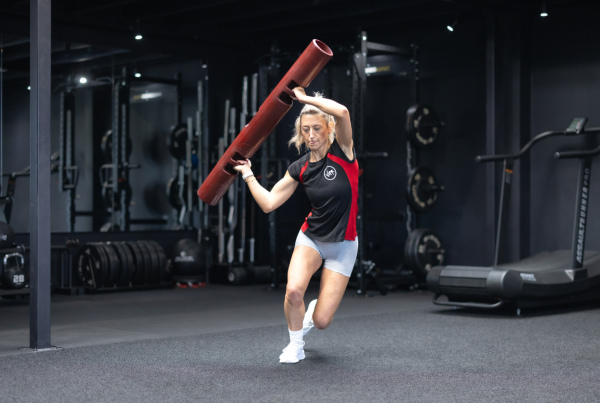

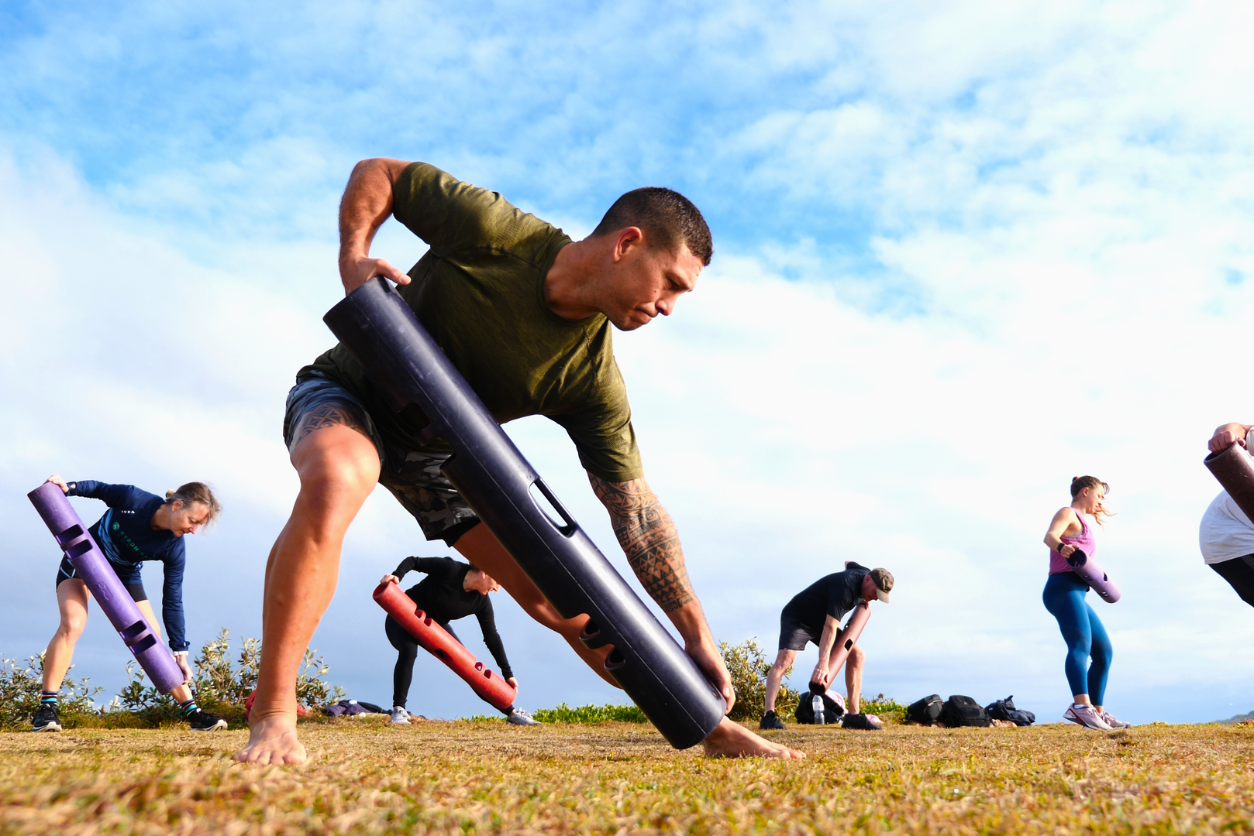
ViPR offers dynamic, multiplanar movement for group training. Stephen Tongue explores 6 ViPR group exercise formats for maximum impact and engagement
ViPR offers unparalleled scope for training clients through all three planes of motion, making it a goldmine for the creative group exercise instructor and a unique method of training for class participants.
As fitness professionals, we’re constantly seeking innovative ways to keep our group classes fresh, effective and engaging. While traditional strength training tools like barbells and dumbbells develop foundational strength, modern functional tools like ViPR unlock whole-body control, mobility and dynamic core stability that is essential for real-world movement.
So, how do you structure an exhilarating ViPR class that caters for 10 to 30 people while maximising intensity and fun? The answer lies in mastering varied and scalable class formats. Let’s explore six tried-and-tested ViPR programming structures designed for maximum impact and maximum group engagement.
The formats
As a class instructor, cycling systematically and periodically through class formats and offering training themes keeps your class participants engaged, challenged and prevents training plateaus. Let’s look at six different ways you could structure your ViPR class, the advantages and disadvantages, and get some example drills you can use in your exercise selection.
1. Load to unload: ViPR and floor-based supersets
Supersets are a classic time-saver and intensity booster, pairing two exercises with minimal rest. In this format, you pair a demanding ViPR lift with a grounding, floor-based movement. This offers a potent blend of loaded movement and strength endurance.
How to structure it
- Eight to 10 pairs of movements
- 30-45 seconds per station or 12-15 reps
- Participants work in pairs or small group pods
Example superset pairs
- Floor: Bear crawls
ViPR: ViPR lateral tilts (preview here) - Floor: Lateral bear crawls
ViPR: Overhead ViPR squats - Floor: Glute bridge
ViPR: ViPR loaded lateral lunges - Floor: Press-ups
ViPR: ViPR uppercuts (preview here)
2. Tri-planar tri-sets: Moving in 3D
ViPR is fundamentally about Loaded Movement Training. This means training your body to mimic movements from real life and sports through the sagittal, frontal and transverse planes. This format drills that concept home by creating a three-exercise circuit (tri-set) using one ViPR, where each exercise hits a different plane of motion.
How to structure it
- Three-exercise blocks repeated two or three times
- Coach cues the plane before each move to build awareness
- Works brilliantly for movement-education-focused classes
Example tri-sets
Tri-set 1: Lower-body power:
- Sagittal: ViPR deadlift to overhead reach
- Frontal: ViPR lateral shuffle
- Transverse: ViPR rotational lunge with reach
Tri-set 2: Upper-body integration:
- Sagittal: ViPR front-loaded squat and press
- Frontal: ViPR lateral step and rainbow
- Transverse: ViPR halo rotations
Tri-set 3: Total-body athleticism
- Sagittal: ViPR front/back pivot lunges
- Frontal: ViPR ice skater with counter-reach
- Transverse: ViPR pivot and punch
Get multiplanar video inspiration here.
3. The hybrid circuit: Traditional circuit with ViPR and bodyweight
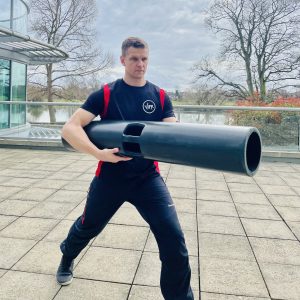
Sometimes, keeping it simple is best. A traditional circuit allows for high volume and varied demands. This format uses 10 stations, alternating between a ViPR-loaded exercise and a bodyweight movement, ensuring a balanced workout that hits strength, power and endurance.
How to structure it
- 10 stations (five ViPR, five bodyweight)
- 40 seconds on/20 off, or 60/30 for strength endurance
- One or two full laps around the circuit
Example stations
ViPR stations:
- ViPR shovel
- ViPR overhead reverse lunge
- ViPR forwards/backwards tilt
- ViPR bent-over rowing pattern
- ViPR curtsey lunge
Bodyweight stations:
- Bear crawls
- Mountain climbers
- Air squats
- Triceps dips on step or floor/triceps press-ups
- Plank variations
Get ideas here with our ‘10 exercises for beginners’ video.
4. The deep dive: Fascial line circuits
For advanced clients and trainers, programming based on fascial lines (as popularised by Anatomy Trains) provides highly integrated, full-body conditioning. ViPR’s Load (carrying it), Shift (moving it through gravity) and Tilt (tipping it) actions naturally engage these lines. This format uses small circuits focused on specific lines.
How to structure it
- Three mini circuits, each with three or four exercises
- Two to three minutes per circuit before rotating
Circuit 1: Anterior and posterior lines
- ViPR thread the needle
- ViPR forward lunge and reach
- ViPR bent-over row
- Bodyweight: Cobra or back extension pattern
Training feel: Strong, long lines front and back
Circuit 2: Lateral lines
- ViPR lateral lunges with overhead lift
- ViPR side shuffle and shift
- ViPR lateral rainbows
- Bodyweight: Side plank variations
Training feel: Upright stability, side bending, hip-to-shoulder connection
Circuit 3: Rotational (spiral) lines
- ViPR woodchop
- ViPR rotational lunge
- ViPR pivot punch (hooks)
- Bodyweight: Kick sits
Training feel: Spirals, rotational strength, elastic recoil
Get lateral line video inspiration here.
5. Synergy training: Partner-based ViPR circuits
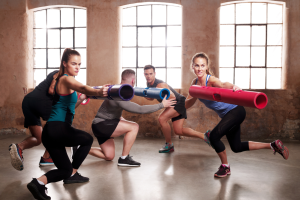
Group training is fundamentally social and partner drills boost motivation and teamwork. This format uses one ViPR per two people, requiring communication, trust and shared effort. Team and partner drills make training reactive, playful and build community.
How to structure it
- Five or six partner stations
- Partners alternate roles: pusher/puller, dodger/chaser, leader/follower
- Rotate partners halfway through class for variety
Example partner drills
- ViPR tug-of-war (horizontal pull/push pattern)
- ViPR rotational pass (standing or lunging)
- ViPR rainbow handoff (frontal plane arcs)
- ViPR partner squat and shoulder swap
- ViPR lateral tilt relay
Get ViPR partner drill video inspiration here.
6. The movement mash-up: ViPR flow sequences
ViPR flows are instructor-led sequences that connect a series of movements seamlessly, creating a routine that emphasises rhythm, balance and co-ordination. The instructor begins with one exercise and progressively adds another until a 10-exercise chain is formed.
How to structure it
- Begin with exercise one, perform 20-30 seconds
- Add exercise two, perform 20-30 seconds
- Continue adding until all 10 are performed as one sequence
- Coaching emphasises control and seamless transitions
Example 10-move flow
- ViPR front-loaded squat
- Add overhead reach
- Add forward step lunge
- Add rotational lunge
- Add halo
- Add lateral lunge
- Add shovel lift
- Add pivot punch
- Add woodchop
- Add overhead carry walking lunge
Get ViPR flow video inspiration here.
Pros and cons of each format
| Format | Description | Pros | Cons |
| Supersets | Two exercises, one ViPR-based, one floor-based (e.g., bodyweight or core). | Time efficient: Maximises work-to-rest ratio.
Scalable: Easy to regress the floor exercise (e.g., from press-up to kneeling press-up). Muscle fatigue: Excellent for building muscular endurance. |
Flow disruption: Transitioning between ViPR and the floor can slow the class pace if not coached well.
Space: Requires enough floor space for everyone to lie down. |
| Tri-sets | Three consecutive ViPR exercises, focusing on a movement in the sagittal, frontal and transverse planes. | Functional: Develops multiplanar movement.
Concept clear: Great way to coach clients on the three planes of motion. |
Complexity: Requires excellent coaching of technique and explanation of the theory. Pace: Maintaining a high-paced class may be harder than in a simple circuit. |
| Traditional circuit | 10 stations: five ViPR, five bodyweight. | High volume/endurance: Builds staying power for longer events. Engagement: Keeps clients moving and engaged and is a familiar format. | Equipment density: Requires one ViPR for every one or two participants and a large space for 10 stations. Instructional overload: May be difficult for a single instructor to monitor form at all 10 stations. |
| Partner Circuits | One ViPR between two, used together simultaneously to perform a shared exercise. | Social/Motivational: Excellent for morale and fun.
Efficiency: Halves the required ViPR equipment (better for large groups). |
Pacing: One partner’s speed can dictate the other’s pace. Instructional: Coaching cues must be directed at both partners simultaneously. |
| ViPR Flows | An instructor-led sequence of 5-10 exercises linked together without putting the ViPR down. | Coordination: Sharpens precision footwork and reactive agility. Concentration: Requires focus on form and transition.
Seamless Transition: Develops balance, coordination and timing. |
Frustration: Beginners may struggle to keep up or maintain the flow, especially with complex drills.
Static: Clients remain in one spot, which may not appeal to those who prefer high-speed fast paced circuits. |
Final coaching considerations
Remember, scalability is key in all these formats – everyone should be able to join in the movement party regardless of ability. Adapt the load (ViPR weight), volume (sets/reps/time) and complexity based on your clients’ fitness levels and goals. For group classes, prioritise safety, technique and movement quality before ramping things up with speed and intensity.
By mixing these diverse ViPR formats, you’re not just running a class; you’re creating a dynamic, practical and inspiring experience, ensuring your clients discover new levels of physical resilience and fun. Mixing these six formats across your calendar will keep your classes fresh, purposeful and interesting. ViPR was built for movement and your class is where that comes to life.
Get group ViPR video inspiration here.
Check out the new ViPR website for inspiration, flows and classic moves, and you can buy your ViPR directly on site.