

The right playlist can make or break a workout, says the team at PRS for Music. Here’s what you need to know about about music licensing for fitness instructors and personal trainers.
It’s no secret that music can transform any workout experience. Whether it’s a themed spin class, a BPM-boosted body blast or a heart-pumping Zumba session, the most effective fitness classes typically feature a specific musical accompaniment that structures the workout and encourages every participant to bring their A-game.
This sentiment was reflected by the findings of a recent survey by PPL PRS Ltd*. 85% of those surveyed said that they would be willing to participate more frequently in exercise classes if recognisable and motivational music is played.
The value of music to the fitness industry, then, cannot be understated. But how can fitness instructors and personal trainers ensure that the music they choose for their work is licensed, and what benefits does music licensing have for the actual creators of the music? Here’s what you need to know.
The benefits of music in fitness classes
Music can be the difference between a good workout and a great workout. Carefully curated music can be a core component of a fitness session, with playlists specifically designed to reap results and elevate the overall experience for attendees.
Anyone who’s ever wobbled mid-deadlift or flagged at the bottom of a squat will know the unparalleled motivation that comes with the perfect song hitting at just the right moment. After all, music can bring the following to any session:
- Rhythm
- Tempo
- Enjoyment
- Motivation
- Focus
- Distraction
- Mood booster
One 2020 research review found that music can even help your body’s awareness of perceived exertion, meaning your workouts can actually feel easier.
So, given how music brings the best out of every workout, how can you license the music you want to use in your fitness classes? Firstly, it’s important to get to know the basics about music copyright.
How does music copyright work in fitness?
All music is protected by copyright, which means that businesses must get permission from music creators to play their songs in public settings – including spaces where people pay for fitness classes.
While making a playlist using a Digital Service Provider (DSP) such as Spotify or Apple Music might seem like the easiest option when it comes to using music in your business, that’s not usually allowed under terms of service. You should always check the terms and conditions of your preferred streaming platform to see if your subscription is for non-commercial use only. Alternatively, you can use a dedicated fitness music app or platform (such as FitPro) to source your music as they already have the necessary licensing in place.
Music licences, however, streamline the process of obtaining that copyright permission, giving you peace of mind that all of the music you use in your classes is being played legally. The organisation that looks after this side of things in the UK is the world-leading collective management organisation PRS for Music, which supports fitness industry professionals with their licensing needs.
Fairly compensating music creators
If you’re passionate about growing your fitness business, you’ll be able to appreciate why it’s important that songwriters and composers are fairly compensated for their work. The work of these creators – including those who rely on royalties to make a living – is often played by businesses without them ever knowing.
But going through the proper channels is a win-win. Not only does the music boost the quality of your classes but, by buying a music licence, you’ll be supporting the creators behind the motivational tunes that keep your sessions full.
PRS for Music represents the rights of more than 180,000 members and a repertoire of over 45 million musical works. They ensure fair payment for creators by collecting royalties whenever their music is played in public, broadcast, downloaded, streamed or performed live.
Let’s now outline the various licensing options available for personal trainers, group instructors, dance teachers, yoga classes and more.
Types of Music Licences for Fitness Professionals
TheMusicLicence via PPL PRS
If you own or manage a venue like a gym or cafe, you will need TheMusicLicence to play copyrighted music out loud in these spaces. It covers both background music and the music played in your classes. PPL PRS administers TheMusicLicence on behalf of PRS for Music.
Professional Dubbing (Pro Dub)
If you take pride in making your very own mixes for your classes – meaning you curate playlists by copying music from various sources onto a new format – then you will need a Pro Dub licence. This includes both the copyright in the legally purchased musical work and the permission to copy it onto other formats, like CDs or downloadable content.
Commercial Playlisting
Some fitness spaces will use a separate playlist as background music, perhaps when your class attendees are getting ready or warming up in communal spaces. In this instance, you would need a Commercial Playlisting licence, which covers copying music for your own playlists. You should note that this falls into a different category from your dedicated class music.
Digital Music Licence for Fitness and Dance
This licence is designed specifically for online classes hosted by trainers, gyms, studios and dance instructors. It covers both livestreamed classes and on-demand episodes, meaning your clients can still work out to great music digitally. However, it does not include music that plays in physical spaces like gyms.
Separately, if you want to edit music directly into a video – known as synchronisation – this isn’t covered under this particular licence.
Performing Right Online Licence (PROL)
If you source class music through a dedicated digital service or licensed fitness music provider like FitPro and play it through your own online fitness platform or website, you’ll need a PROL licence. It allows you to play music in your sessions when your provider has already handled the copyright on their side.
FMS (Fitness Music Services)
This licence is for those who supply music to fitness professionals solely for use in classes. Therefore, if you make music available to download – specifically audio-only, music video tracks or karaoke tracks – from a digital database or in physical form like DVDs or hard drives, then you’ll need this licence. However, it does not include the right to play it in any venue.
Which licence is best for me?
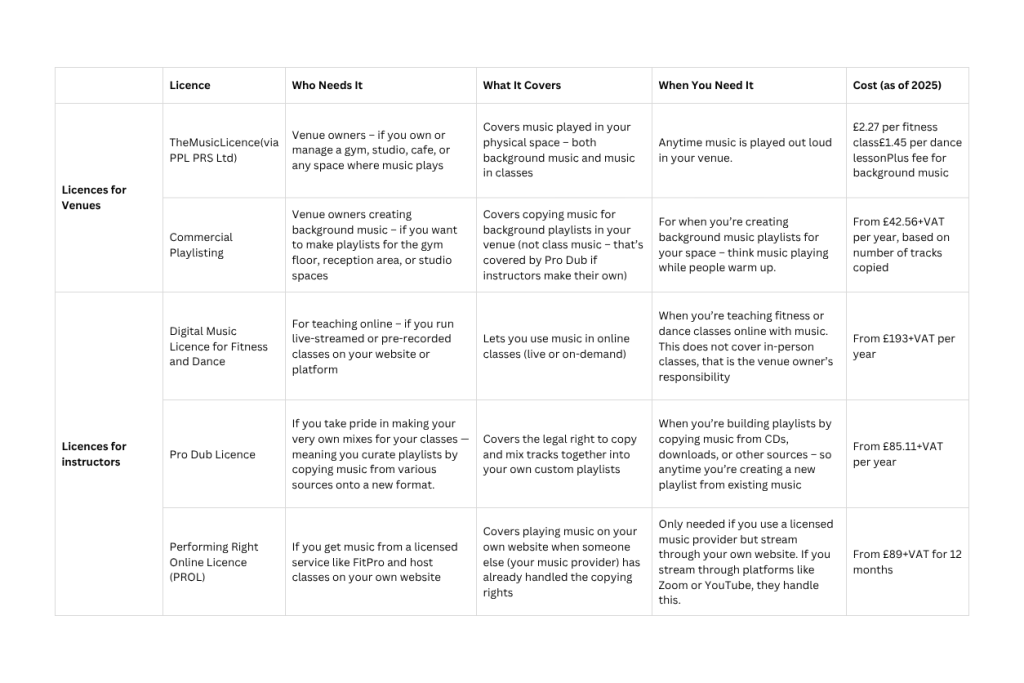
If you’re still unsure about which licence best applies to your business, you can take a look at the table below, which distinguishes what is applicable to venues and individual trainers. You can also fill out this form and the team at PRS will get in touch with you to help support with your licensing needs.
* Survey conducted by PPL PRS via Attest with 500 UK participants March 2025.
Discover more about FitPro’s music offering in this post on the FitPro blog.
The team from PRS for Music:

Melissa Goodwin of PRS for Music
Melissa Goodwin is Business Development Manager at PRS for Music. She has worked in the music licensing industry for eight years in the UK & USA and has a broad understanding of numerous sectors that use the world’s most inspiring music, while making sure the talented people who created it are paid for their work. As an avid gym-goer, she understands the value music brings to exercise and wants to support the fitness community to thrive!

Tuoyo Sakpere of PRS for Music
Tuoyo Sakpere, Business Development Manager is part of the Commercial Partnerships team who developed the new Digital Fitness & Dance Licence. Designed in collaboration with customers and trade bodies, it gives customers access to a global repertoire of more than 45 million songs. Tuoyo has always been a sports enthusiast, and changed his gym routine to incorporate calisthenics training, which he loves!

Natalie New of PRS for Music
Natalie New, Licensing Consultant, has worked at PRS for Music for 17 years and has a vast knowledge in music copyright. She works closely with customers to promote how music enhances a business while ensuring songwriters, composers and producers receive the royalties they are due for the use of their songs. Natalie enjoys yoga and Clubbercise where the music playing is so good, it feels like she is dancing on a night out!

Emily Gryc of PRS for Music
Emily Gryc, Revenue Assurance Manager. With more than 14 years of experience spanning music copyright, strategic partnerships and development of PRS’s licensing tariffs, Emily’s part of the team who are instrumental in the consultation and transition of PRS licensing tariffs to PPL PRS Ltd and TheMusicLicence. Emily’s day to day sees her supporting the PPL PRS team to the shared goal of creating a better experience for PRS for Music customers.