

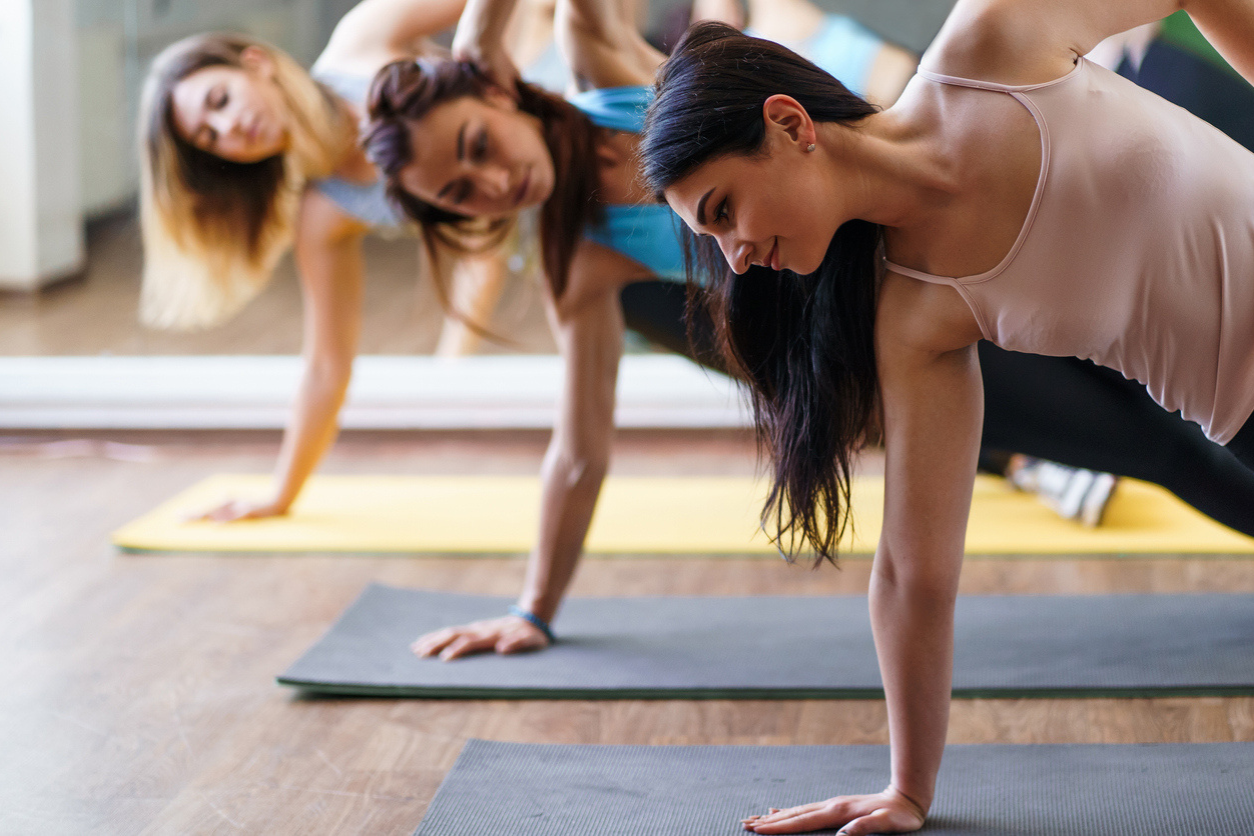
Jayne Nicholls explores rethinking safety in group exercise sessions, and says that over-emphasising safety may ultimately risk injury
I was prompted to write this after an instructor came to one of my presentations and asked me “are you worried when you see so many people moving out of alignment?” It’s a long journey of re-education but here are the basics relating to the risk of injury in group X modalities.
Many instructors rely on basic cues with the intention of keeping participants safe:
- “Knee over ankle.”
- “Pelvis in neutral.”
- “Never let your knee go past your toes.”
- “Always keep your spine straight.”
These instructions are well meaning but they were constructed as quick quotes to help avoid poor mechanics undermining decades of evidence, experience, and human success stories. Here’s the problem; when these “rules” are treated as absolutes, they stop being helpful, they create fear of movement, restrict natural biomechanics, and prevent progression.
If you’re a qualified instructor, you’ll know the body is not a set of right angles, it’s a dynamic, adaptable, resilient system. Progress in strength, mobility, and control comes from exploring beyond the basics, not freezing people at beginner level guidelines forever. Let’s break down why sticking rigidly to these rules is holding clients back, and how a shift in perspective can create more advanced instruction.
The Origins of “Safety Rules”
The fitness industry loves simplicity. Telling a new client “keep your knee over your ankle” is an easy, memorable way to stop them from collapsing inward, wobbling, or overloading joints in a way they can’t yet control. It also gives you time to assess and get to know them. The same goes for “pelvis in neutral.” In Pilates, this cue helps participants find awareness of their lumbopelvic region, it prevents excessive arching or tucking in the first weeks of training. These rules are not wrong, they serve as useful entry points, but here’s the catch when they’re never updated, they become limitations! The very rules meant to introduce safety end up restricting growth.
“Here’s the biggest irony; this overemphasis on “safety” can increase the risk of injury! By avoiding natural movement patterns, clients remain unprepared for the demands of real life.”
Why the Rules Break Down
-
Knee Over Ankle
In a static lunge or warrior pose, it’s fine to keep the knee roughly stacked over the ankle, but life doesn’t happen in neat 90-degree angles. When you climb stairs, sprint, squat heavy, or land from a jump, your knee routinely travels forward of your toes. This is not dangerous it’s necessary biomechanics; when the knee moves past the toes, the load is distributed through the quads and ankle, preventing this forward travel artificially increases stress on the hips and spine. In other words, insisting on “knee over ankle” forever doesn’t protect it compromises and here lies real danger!
-
Pelvis Neutral
Neutral pelvis is a helpful teaching tool, but the pelvis is designed to move. Walk, run, lunge or kick, and your spine rotates, pelvis tilts with every step. Freezing it into “neutral” during exercise creates unnatural rigidity. Example, in yoga, backbends demand anterior tilt, In Pilates sidekicks the pelvis must stabilise but also respond dynamically and in athletic movements like sprinting, the pelvis cycles between anterior and posterior tilt constantly.
Insisting on “neutral pelvis at all times” ignores the reality of functional movement and again becomes guilty of constant regression.
-
Spine Straight
The spine is a multi-curved structure built to flex, extend, side bend, and rotate yet many instructors cue participants to “keep it straight” as though movement is inherently unsafe.
Yes, loaded spinal flexion (like a rounded heavy deadlift) requires caution but controlled spinal flexion in Pilates roll downs, hip flexion in yoga forward folds, spinal rotation in sports is not just safe it’s essential for healthy tissue adaptation. Avoiding spinal motion entirely weakens resilience rather than building it1
The Danger of Over-Simplification
When instructors cling to these black-and-white rules, three problems arise:
- Participants get stuck at a beginner level. They never learn to tolerate deeper ranges of motion, heavier loads, or more dynamic patterns.
- They generate fear. Clients start to believe that letting their knee pass their toes or allowing spinal flexion is dangerous, which creates tension, hesitation, loss of confidence and ultimately none attendance.
- It impedes progression. Without progressive overload whether in range, load, or complexity there is no adaptation. Participants plateau both physically and mentally. They endo up exercising for years with no advancement.
Here’s the biggest irony; this overemphasis on “safety” can increase the risk of injury! By avoiding natural movement patterns, clients remain unprepared for the demands of real life.
Rethinking Safety Advancing From Restriction to Resilience
As professionals, our role is not to wrap clients in metaphorical cotton wool, it’s to help them build capacity this means gradually exposing them to more challenging loads, angles, and ranges, so their tissues adapt, their coordination improves, and their nervous system builds confidence.
- Instead of “knee over ankle,” teach controlled loading as the knee travels forward. Progress from bodyweight to loaded squats, lunges, and step-downs.
- Instead of “pelvis neutral,” explore tilt and rotation with control. Use yoga postures, dynamic Pilates, or functional strength drills to let the pelvis move the way it was designed.
- Instead of “spine straight,” train spinal motion progressively. Encourage mobility drills, controlled roll-downs, and rotational strength work.
Of course this does not mean throwing rules out altogether, it means using them as basic stepping stones.
The Role of the Instructor For Progress, Not Paralysis
Your clients trust you to help them move forward, not to keep them trapped at “safe basics” forever. If all you do is repeat the same restrictions, you become a caretaker, not a coach.
Try this method of delivery:
- Educate with context. Explain that rules like “knee over ankle” are starting points, not lifelong commandments.
- Expose gradually. Introduce more challenging ranges in a controlled method using progressions, regressions, and variations as tools.
- Encourage curiosity. Frame movement as exploration, “Notice how your body responds” is more empowering than “Don’t do this, you’ll get hurt.”
- Demonstrate confidence. Demonstrate movements beyond the basics so participants see what’s possible.
When clients see that you are not afraid of depth, range, or complexity, they’ll trust themselves to try more. The whole process equals empowerment and liberation.
Comparing Risk Across Sports
If we step back, group exercise still comes out among the safest ways to train. Running has far higher injury rates, collision sports involve real danger, cycling accidents fill A&E departments.
Group classes, yoga, Pilates, conditioning have a far lower risk profile, especially when supervised by a professional. So why scare clients with over restrictive rules? Our job is to help them become robust enough to handle life outside the studio, where movement is never neat and rule bound.
My Final Thoughts
“Knee over ankle.” “Pelvis in neutral.” “Keep your spine straight.” These rules are not wrong they are simply incomplete, useful for beginners, but dangerous when treated as absolutes. Movement is not about restriction; it’s about resilience. The human body is designed to bend, twist, flex, and adapt. When instructors keep clients trapped in rigid safety cues, they hold them back physically and mentally. The true role of a professional is not to create fear but to create progress. By guiding participants safely beyond the basics, we help them unlock their potential, build stronger bodies, and discover confidence that lasts long after class ends.
Read more by Jayne Nicholls on the FitPro blog, with her post on the rise of somatic practices in yoga. Find her on Instagram @jaynenicholls