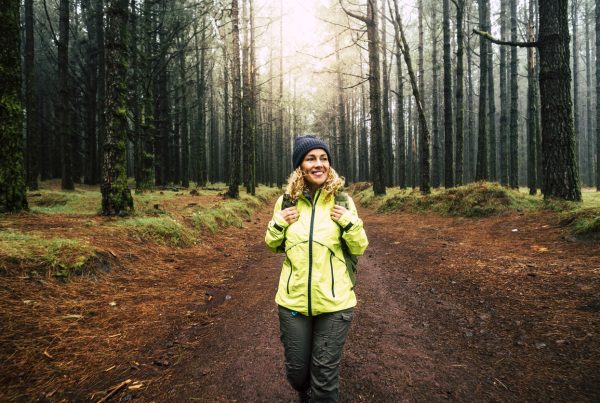

Yoga teacher and intuitive life coach Lucy McGrath deep dives into how she goes about nurturing supportive environments for yoga clients.
When I first discovered hot yoga in the US, I was emotionally and physically exhausted. I had packed up my entire home and family and moved across the world and, although on the outside I looked calm and capable, internally I was living in survival mode.
I had spent years living in fight or flight, first through the pressures of teaching in schools and then through motherhood, over-functioning, over-giving and constantly putting everyone else’s needs before my own. I was completely disconnected from myself and I numbed a lot with alcohol, especially after moving to America. I don’t think I had truly been present in my own body for years.
The very first hot yoga class I attended changed something in me instantly. My teacher opened the class with the words “Welcome home” and I cried from that moment all the way through the practice. Pigeon pose was one of the moments that really cracked me open because it’s one of those postures you can’t really escape from. There was space to surrender into it and in that stillness and vulnerability everything I had been avoiding rose to the surface.
What I realised afterwards was that I needed more of that, not less. Even though I realised how uncomfortable it can be to sit with yourself in silence and honesty, I realised how necessary it is.
That practice changed the entire direction of my life. I stopped drinking. I began to feel again. I realised I needed to leave my marriage and return home to the UK to begin reconnecting with myself and the parts of me I had lost along the way. It transformed my relationship with boundaries, rest, self-worth and emotional safety.
For the first time, I understood that rest isn’t being lazy, it is essential. I learned that I could be still safely and that part of that was I didn’t need to gaslight my own feelings anymore. Yoga became the gateway back to myself.
What I have come to understand through that experience is that safety and permission change everything. So many of us move through life feeling like we have to push, perform or override our own needs just to keep going. In my work now, whether in yoga or coaching, I am constantly weaving in permission and autonomy. Permission to rest and to feel. Permission to take up space and to choose differently. When people are given their autonomy back and when they are reminded that their body, their breath and their experience belong to them, real change begins.
Emotional release
I think the heat in hot yoga strips away our ability to hide.
In everyday life, many of us are incredibly adept at staying busy, distracted and disconnected from what we’re actually feeling. Hot yoga creates an environment where that becomes much harder to maintain. The physical challenge, the breath, the intensity of the heat and the stillness within certain postures all invite honesty.
There’s also something incredibly humbling about the practice. You wobble and struggle. Your ego tries to get involved and your mind becomes so loud and sometimes that you may want to leave the room, but if you stay with yourself, shifts start to happen. Possibilities begin to reveal themselves to you.
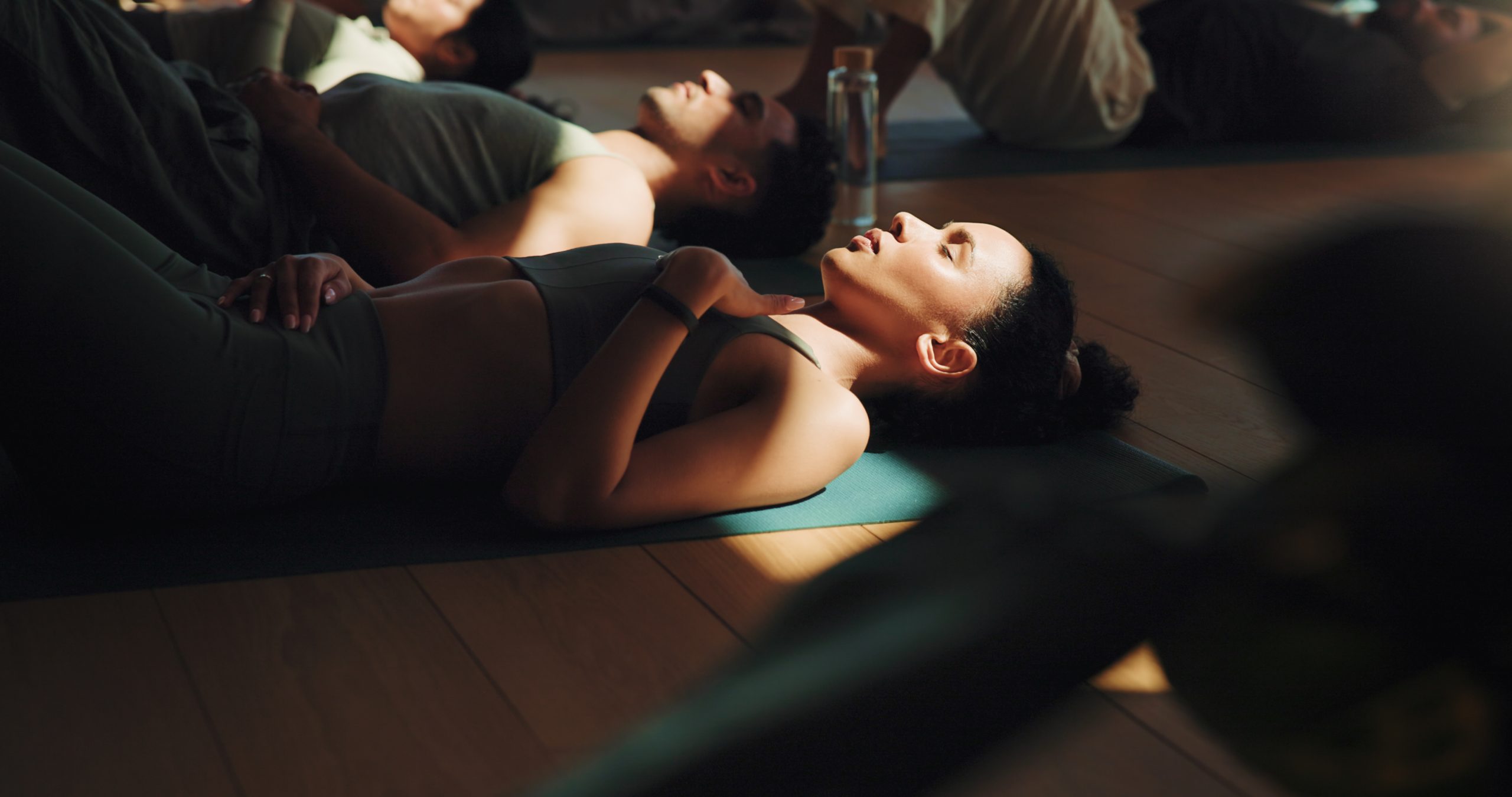
Poses like pigeon (hip openers), balances and even savasana can bring emotions to the surface because they ask us to surrender control. Many people are carrying stress, grief, pressure or emotional exhaustion in their nervous systems without even realising it. Yoga creates space for that to be acknowledged.
I often quote Baron Baptiste, who says that yoga isn’t about touching your toes, it’s about what you learn on the way down.
Safety has to come before vulnerability
I do not believe in forcing emotional experiences or pushing people beyond what feels safe for their nervous system. My role is to create an environment where people feel seen, heard and supported enough so that the sense of safety can emerge naturally.
Autonomy is incredibly important in my classes. Trauma awareness is integral to how I teach. I offer invitations rather than demands, always returning people to choice. I remind people constantly that their practice belongs to them. Rest is allowed and more than that, it’s encouraged as a choice. Modifications are encouraged. Leaving a posture is allowed. Choosing stillness for the full 60 minutes is allowed (and often taken by some clients!).
Ironically, when people feel genuinely safe, they often become more open and courageous anyway.
Clients frequently tell me they feel challenged without judgement in my classes. That balance matters deeply to me because many people already live under enormous internal pressure. They don’t need another environment making them feel as though they’re failing.
“Yoga often becomes the first place where they pause long enough to actually hear themselves again.”
Sometimes people cry silently during practice. Sometimes they stay afterwards to talk. Sometimes they apologise for becoming emotional, which is never necessary. Sometimes clients fall asleep in savasana because, for perhaps the first time in a long time, they feel safe enough to simply rest. To me, that is the real work and I hold space for it all.
At their core, my classes are not about ‘getting it right’, they’re about giving people their permission back.
A gateway to growth
Many of the people I teach initially come to yoga thinking they need stress relief, flexibility or physical fitness, but underneath that there is often exhaustion, overwhelm, people-pleasing, perfectionism and disconnection from themselves. I am talking about women here because most of my yoga clients and currently all of my life coaching clients are women, but I witness these common patterns in some of the men who come to my classes as well.
A common pattern I see among women I work with is that they have spent years defining themselves through roles: mother, partner, caregiver, professional, but who no longer know/remember who they are underneath those responsibilities.
Yoga often becomes the first place where they pause long enough to actually hear themselves again.
Once people begin reconnecting with their bodies and nervous systems, they often become more aware of what isn’t working in their lives anymore. We acknowledge where patterns may have originated, but we focus on awareness, regulation, possibility and potential. We look at what feels predictable and safe in someone’s life versus what may actually be keeping them stuck.
That journey back to self is incredibly powerful.
Reading the room
For me, reading the room is very little about performance and much more about presence.
I pay attention to breath, body language, energy levels, emotional tone and how people are responding moment to moment. Sometimes the room needs challenge and sometimes it needs grounding. Sometimes people need permission to slow down rather than push harder, and often they don’t realise they’re allowed to make that choice until someone gives them that permission.
I can often feel shifts happen collectively during opening breathwork, during physically challenging poses or as people settle into stillness and savasana. There’s often a visible softening when people stop performing and start truly arriving in themselves.
I think fitness professionals can develop this skill by becoming more observant and less attached to delivering/sticking to a session plan. Notice when clients seem disconnected, anxious, withdrawn or overwhelmed. Notice when humour becomes deflection. Notice clients holding their breath/clenching their jaw and see their frustrations and hear their self-criticism/negative self-talk.
“Often the most powerful thing we can do is create space for people to feel seen and heard without judgement.”
Most importantly, create spaces where clients feel like humans rather than projects.
The nervous system is always in the room, whether we acknowledge it or not.
Establishing trust
Trust is built through consistency, safety and the absence of judgement.
People need to know they can show up exactly as they are without needing to perform. Clients feel safe with me because they feel genuinely seen and heard, rather than being managed or dictated to.
Language matters enormously; tone matters; choice matters. Even something as simple as reminding someone they can rest at any time can completely change how safe their nervous system feels in a space.
I notice when people choose a smaller, closed pose over a larger, wider pose. I remember to give options and choice to those who, for example, prefer not to lay on their backs because this can create vulnerability. I create an environment where people are given permission to reconnect with themselves safely, in their own way and own time.
When people feel safe enough to choose their own needs over performance, healing and transformation often begin naturally.
Usually there’s already an awareness that something deeper needs attention. Yoga often opens the door because people begin reconnecting with their bodies, emotions and their internal world again.
Many clients come feeling emotionally exhausted, disconnected from themselves or aware that they’ve spent years surviving rather than truly living. They know change is needed but aren’t yet sure how to move towards it.
Often the biggest thing people need initially is permission; permission to pause, to feel, to rest and to stop abandoning themselves. I often invite people in class to whisper something kind in their own ears.
Creating space without judgement
You don’t need to have all the answers. Often the most powerful thing we can do is create space for people to feel seen and heard without judgement.
Simple things matter: asking clients how they’re arriving today, encouraging body awareness, normalising rest, noticing self-critical language (negative self-talk) and reminding people that progress doesn’t have to come through or feel like punishment.
My clients don’t need someone to fix them; they need an environment where they feel safe enough to reconnect with themselves.
As fitness professionals we also need to understand the difference between supporting someone and stepping beyond our scope/skills and training. We can hold supportive spaces, encourage awareness and build trust while also recognising when deeper therapeutic support may be needed. When we centre permission rather than pressure, people begin to open.
Connecting more deeply
Breath awareness is one of the most powerful tools we have. Simply reminding people to notice their breath can bring them back into the present moment and out of the noise in their heads.
I use invitational language a lot in my classes rather than commanding language. Things like: “Notice what you’re feeling, where do you feel it.” “Can you soften here?” or “What happens if you breathe through this moment rather than fight it?” One of my favourites is “Right here, right now, practising presence.” Language like this is deliberate and chosen to return people to themselves, rather than pull them away from what they’re feeling.
I also encourage people to become aware of their self-talk during challenge. The way we speak to ourselves on the mat often mirrors how we move through life off the mat.
Stillness is powerful too. So many people struggle more with stillness than movement because stillness asks us to be with ourselves honestly. Guiding people in and out of stillness slowly is important. Try not to be packing up or making a noise while a client is still and resting!
Clients who are struggling
The signs that a client is struggling can be very subtle and look/sound like over apologising; harsh self-talk and perfectionism. It can also look/sound like panic or frustration when they can’t do something properly. It can look like pushing beyond reasonable challenge to exhaustion or disconnecting from breath. It can look like the compare and despair cycle and even becoming emotional unexpectedly during stillness.
I think it’s important not to assume or diagnose but simply to approach people with humanity. Ask them, “How are you feeling today?” Take a genuine interest – this can open far more doors and conversations than people realise.
People don’t always need solutions immediately. Sometimes they simply need to feel seen and heard without judgement and in safety. Very often they have the answers within them; it is our job to help them locate and listen to them. To support them to trust themselves.
Developing resilience
I think true resilience is often misunderstood. What I know it isn’t is ignoring pain, overriding exhaustion or forcing yourself beyond capacity at all costs. Many people are already living beyond capacity in their daily lives.
For me, resilience is the ability to stay connected to yourself in discomfort without abandoning yourself. Yoga teaches us this beautifully – people feel into how to breathe through challenge, how to stay present when the mind becomes reactive and how to observe themselves without judgement.
There’s a huge difference between expanding capacity safely and pushing someone beyond what their nervous system can tolerate. Learning to sit with discomfort consciously can expand resilience. Constantly overriding your body can create further dysregulation. That distinction is incredibly important.
Practical techniques to stay present
Breath is always the anchor.
Simple reminders to slow/return to the breath, deepen the exhale or notice when someone is holding their breath can completely shift how present they feel in their body.
Grounding techniques are powerful too. Encourage clients to notice their feet on the floor, the sensation of movement or the rhythm of their breath, rather than becoming consumed by thoughts. To notice where their body is in space, proprioception and how it feels. Yoga is about the experience and feeling of the poses, not what they look like.
Creating moments of pause within movement is important. We live in such a fast-paced world that many people rarely experience stillness. Building small moments of awareness into fitness sessions can help clients develop emotional regulation and mental clarity over time.
Coaching through blocks
One misconception is believing that pushing harder is the answer. Often clients don’t need more pressure, they need more safety, awareness and nervous system regulation.
Another misconception is assuming emotional responses are something to fix quickly or avoid/ignore entirely. It’s about supporting our clients to learn that emotions aren’t signs of weakness, it’s information.
We also need to be mindful around physical adjustments and touch. Not everyone feels safe with hands-on correction, particularly if they have experienced trauma. Consent, autonomy and choice aren’t optional, they are essential.
Fitness spaces can become incredibly healing environments when people feel respected, safe and genuinely supported, rather than judged or pushed beyond their limits.
Building deeper relationships with clients
Deeper relationships are built through genuine connection.
People can tell when they’re being treated as a body to transform versus a human being to support. Listening matters. Remembering small details matters. Asking how someone actually feels rather than only focusing on physical results, matters.
Often the transformation people are searching for physically is connected to something much deeper emotionally (i.e., confidence, self-worth, safety, identity, stress or burnout). When clients feel safe enough to reconnect with themselves as a whole person, transformation naturally begins extending beyond fitness goals alone.
Guiding clients to open up
Perfectionism, overtraining, harsh self-criticism, inability to rest, constantly apologising, disconnection from the body and pushing through exhaustion can all be signs that someone is struggling emotionally underneath the surface.
I also notice clients who become deeply uncomfortable in stillness or silence, because those moments can bring them face to face with thoughts and feelings they’ve been avoiding.
The important thing is not to force a disclosure ever or to assume we know someone’s story. We simply create spaces where people feel safe, supported and not judged.
Sometimes the most powerful thing we can offer someone is permission: permission to slow down, to breathe, to rest and to stop believing they have to earn their worth through constant striving.
When we create spaces rooted in safety, choice and autonomy, we give people the opportunity to reconnect with themselves in a way that feels sustainable and real. This is where growth and transformation happens – through awareness, trust and permission.
After all, yoga is a practice, not a perfect.
 Lucy McGrath is a yoga teacher and intuitive life coach. https://lucymcgrath.co.uk