
Debby Sargent of UKSCA looks at shoulder injuries, and explores whether S&C programmes can reduce injuries in sport
The shoulder joint is made up of four separate joints: the glenohumeral, acromioclavicular, sternoclavicular and scapulothoracic. The glenohumeral joint is the primary articulation, a ball-and-socket joint that joins the humerus (upper arm bone) to the shallow glenoid cavity (or fossa) of the scapula (shoulder blade). This joint permits a variety of motions, such as shoulder flexion, extension, abduction, adduction, internal and external rotation, and circumduction. The remaining three joints are formed when the bony structures of the shoulder girdle (i.e., the clavicle and scapula) connect the upper limb to the axial skeleton (i.e., the trunk). Shoulder elevation, depression, protraction, retraction, and upward and downward rotation of the scapula are all made possible by the shoulder girdle, which also gives the arm a stable base. The shoulder’s anatomical architecture favours a wide range of motion (in all three planes) above stability, which renders it more prone to injury than some other major joints1,2,3.
Shoulder injury epidemiology
Many individuals put their shoulders at risk of injury, especially those who play sports that call for the tolerating of force in outstretched positions (such as collision sports) or excessive, repetitive, overhead movements (such as swimming or throwing sports)1,2. In 97 studies involving children aged five to 18, a systematic review of youth sports found that the median seasonal (six to 12 months) prevalence of shoulder injuries was 10.9% (range 1.2-28.2%).
Additionally, the incidence of shoulder injuries was higher during competition than during training (range 0.05-2 per 1,000 Athlete Exposures [AEs] vs range 0.009-0.25 per 1,000 AEs)2, a finding commonly reported in the literature3,4,5. In a sport like swimming, which is marked by high weekly training volumes and intensities (up to 12,000 ± 2000m, four to six days a week for elite swimmers), the shoulder was found to be the most commonly injured joint, accounting for approximately 40% (n=1,114 women, 1,436 men, and 21 mixed group)3 of all injuries.
While these pool-based activities are more likely to be susceptible to chronic overuse injuries due to repeated overhead motions (front crawl and butterfly strokes being the most problematic)3, other pool-based contact sports such as water polo report even higher shoulder injury statistics. According to Minelli et al (2024)6, 58% (n=92) of water polo players reported having shoulder pain. While swimming and throwing can cause overuse injuries, keeping the arms in an overhead position to protect oneself from other players can also result in traumatic injuries from contact or defensive manoeuvres.
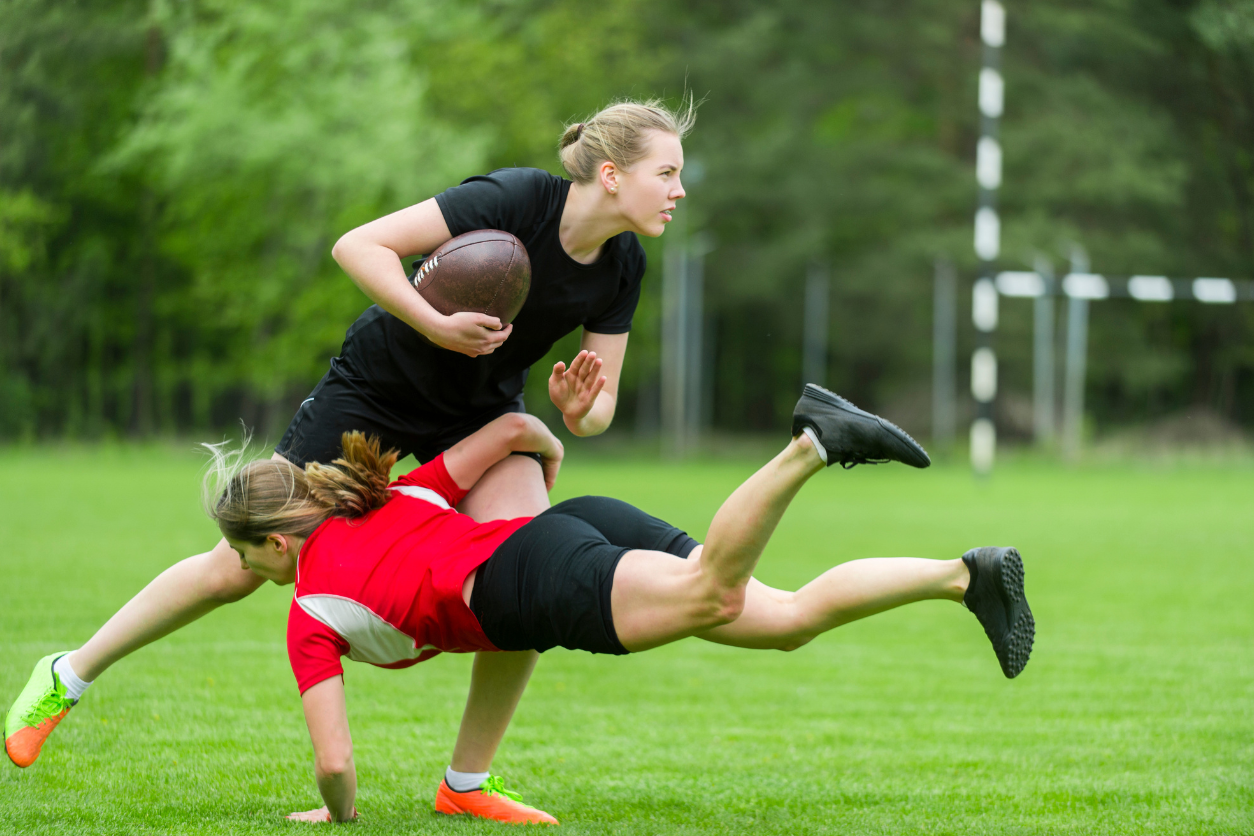
Unsurprisingly, injury incidence is reported to be significant in high-impact collision sports like rugby, where players do not wear protective equipment (e.g., overall injury incidence ranging from 6.9 to 12.7 injuries per 1,000 player hours)4. In terms of upper-extremity injuries, the head/face (11.2–18.3/1,000 player hours) and shoulder (8.5–16.5/1,000 player hours) have the highest rates4.
As these studies demonstrate, the shoulder is a common site of injury and different activities will present with varied injury types and patterns. As such, it needs to be carefully considered when creating the annual training plan (also known as the macrocycle) to ensure it is strong enough to withstand the demands of training and competing. To lessen the chance of a shoulder injury, a comprehensive needs analysis is necessary, along with an injury analysis that offers insights into the processes of injury. Since it is not always possible to prevent trauma injuries, it is also recommended to have a full comprehension of the procedures involved in returning to play to reduce the risk of re-injury.
Table 1: Common types of shoulder injuries
| Type of injury | Description |
| Dislocations (glenohumeral joint) | The humerus is displaced from the shoulder glenoid either partially (i.e., a subluxation) or fully. |
| Shoulder impingement syndrome (subacromial impingement) | Caused by inflammation and irritation of the rotator cuff (and/or the long head of the biceps) tendons as they pass through the subacromial space (region beneath the acromion and above the humeral head), which results in shoulder pain, weakness and decreased range of motion. One of the most frequent reasons cited for shoulder pain. |
| Glenohumeral joint instability | The shoulder joint’s inability to keep the humeral head centred in the glenoid cavity, which can result in partial or full dislocation. |
| Bursitis | When the fluid-filled sacs (bursa) that cushion the joints become painful and swollen (inflamed). Positioned between the acromion of the shoulder blade and the rotator cuff tendons, the subacromial bursa is the main bursa in the shoulder. The most prevalent kind of bursitis is that of the shoulder. |
| Rotator cuff tears | Four muscles – the supraspinatus, infraspinatus, subscapularis and teres minor – are grouped together to form the rotator cuff, used to stabilise and regulate shoulder movement. Originating from the shoulder blade, the muscles form tendons that attach to the top of the humerus. The tendons may rupture from their connection due to recurrent microtrauma or abrupt trauma. |
| Labral tears | A labral tear or injury happens when there is damage to the labrum, which is a ring of cartilage that lines the shoulder socket (glenoid) and deepens the socket while acting as a cushion between the bones. |
| Acromioclavicular (AC) separation | Separation of the AC joint (where your shoulder blade and clavicle connect) happens when the ligaments are overstretched by an external force, such as a fall or collision. |
Managing the return to play (RTP) process
The type and severity of shoulder injuries determines how much time is lost from training and competition. A systematic review of male professional rugby4 revealed that matches caused 25-39.8 days lost from training (training injuries 32.2 days) and that the burden of recurrent injuries was higher than that of new injuries (28-51 vs 22-35 days lost). This underscores the importance of preventing the initial injury. Regarding shoulder and elbow injuries in high school and collegiate softball players, another systematic review found that 5.6-10.2% of individuals with shoulder injuries required more than three weeks to RTP5.
Although shoulder injuries place a heavy physical strain and burden on some athletes, it is important to consider the non-physical components of shoulder injuries, which may have effects that last far longer than the physical rehabilitation process. A player’s identity may be threatened by shoulder injuries, which can also heighten concerns about future career advancement or continuation. According to White et al7, female rugby players have expressed feeling “vulnerable” and lacking confidence when placing their shoulders in particular positions during play, which leads to “fear of failure”. In addition to helping players develop their safety, technique and confidence in tackling, technical coaches should make sure players are gradually exposed to contact during practice and competition during the RTP process7.
Risk factor management
Given that shoulder injuries have a high injury recurrence7,8, a knowledge of modifiable risk factors is warranted. Some of these are described below:
- Dominant shoulder (strength and/or range of motion deficits)
A systematic review including 23 studies looking at risk factors for shoulder injuries in female athletes involved in a range of overhead sports (swimming, volleyball, basketball, handball, gymnastics or softball)1 found that 39% of these studies reported a mean risk ratio (RR) of 2.04 for the dominant shoulder, meaning the latter was twice as likely to sustain a shoulder injury compared to the non-dominant shoulder. With many sports being predominantly one-sided (e.g., racquet sports, golf, throwing sports) this is problematic. The increased injury incidence and prevalence in the dominant arm has been attributed to factors including repeated increased force production and absorption in the dominant arm and imbalances in strength or range of motion between muscle groups in the dominant arm9. Athletes must engage specific shoulder muscles to participate in sports and limb dominance can lead to movement impairments due to changing arthrokinematics, which can lead to structural injury to the joint. While scapular dyskinesis refers to abnormal movement patterns of the scapula (shoulder blade) during arm elevation, scapulohumeral rhythm refers to the co-ordinated movement of the scapula and humerus. The risk of scapular dyskinesis, disruptions to the scapulohumeral rhythm and shoulder injury can be increased by throwing/overhead-related tightness in the levator scapulae, upper trapezius and pectorals, as well as by strength imbalances in some upper-body muscles, including the serratus anterior, external and internal rotators (e.g., rotator cuff which stabilises the GH joint), lower and mid trapezius9. Furthermore, literature has documented deficits in external and/or internal rotation (as well as total arc of rotation) range of motion between dominant and non-dominant sides, which are frequently mentioned as risk factors for shoulder injuries in overhead athletes1.
- Volume and time in the sport
The risk can be increased by excessive or incorrect training load, especially during competitions. Gibson et al2 noted that injuries significantly increased when training load increased by more than 60% compared to the previous month in youth athletes. Furthermore, the risk of shoulder injuries has been shown to be predicted by playing position because of position-specific chronic overuse or exposure to traumatic events. In a prospective cohort of male under-19 Irish Ruby Union players, 66.7% of 465 match injuries happened during the tackle event. The overall burden of tackler injuries was 36% higher than that of ball-carrier injuries (590 vs 435 time loss days, p<0.001), and tackler injuries occurred 33% more frequently than ball-carrier injuries10. Additionally, elite female cricketers’ (409 shoulder injuries across eight seasons) slow-onset injuries were most frequently experienced by fast bowlers (51%), while sudden-onset injuries were most frequently sustained while fielding (69%)8. Monitoring training loads is standard procedure for S&C coaches. However, it is evident that ‘what’ you monitor is important, and this may vary depending on the sport and position within that sport to properly understand the relative risk of shoulder injuries in your athletes. For athletes, maintaining an appropriate body composition is key because there is evidence that heavier players are more likely to sustain a shoulder injury when falling2.
- Deficit in the kinetic chain
The kinetic chain allows for the development of more force in the upper body during overhead throwing sports, generally linked to improved performance for athletes. Too much strain on the shoulder joints due to a kinetic chain deficit may result in a higher frequency of shoulder injuries11. Interventions aimed at enhancing the kinetic chain’s strength and co-ordination have been demonstrated to enhance shoulder injury outcomes by enhancing the body’s capacity to transmit force from the lower to the upper body11.
Effectiveness of injury prevention programmes
Injury-prevention programmes are successful in preventing shoulder injuries (up to 28%)12 and are based on an understanding of the sport- and person-specific risk factors. Accordingly, they have generally included strengthening (for local and global muscles), stretching and mobility exercises for isolated muscles/movements specific to a body region through to whole-body, multi-muscle, multi-joint exercises (i.e., the full kinetic chain)1. Clearly a well-designed S&C programme (from macrocycle to individual session design) can improve many of the risk factors discussed. Nonetheless, the following advice would be suggested for an intervention to be long-term successful2:
- A programme that is easy for players and coaches to follow and understand.
- It saves time and does not significantly interfere with other essential training procedures.
- It is possible to monitor and document shifts in shoulder injury rates.
- Simpler interventions requiring less equipment, planning and preparation are more likely to be accepted. Therefore, training modalities and equipment must be accessible and cheap for the typical coach or athlete.
Depending on the needs of the person, an athlete’s training programme might include a variety of exercises and training types, some of which are included in Table 2.
Table 2: Suggested S&C training interventions and modalities for a shoulder prevention programme
| Intervention target | Training intervention/technique |
| Flexibility | Myofascial release techniques; controlled articular rotations (CARs), all stretching types (static, dynamic, PNF); PAILS and RAILS (both isometric loading protocols that improve mobility and strength).
PAILS, or progressive angular isometric loading, occurs when the muscle being stretched is contracted. With regressive angular isometric loading (RAILS), the targeted muscle is further lengthened by contracting the muscles on the other side of the joint. |
| Mobility | Foundational movements; calisthenics; yoga flow; animal walks; gymnastic movements (e.g., handstand variations), etc., (minimal equipment required – e.g., mat, dowel rod). |
| Banded and cable exercises | Particularly effective to target smaller muscle groups in isolated joint movements such as the rotator cuff (e.g., internal and external rotation, band pulls), to strengthen and increase range of motion. |
| General strength | Loaded vertical and horizontal pull and push variations, including eccentric-only versions of exercises. |
| Kinetic chain strength | Multi-muscle, multi joint exercises – clean, snatch and push press/push jerk variations; squat and lunge variations performed with a load overhead; trunk exercises (e.g., roll outs; loaded isometric holds in extended arm positions). |
| Banded and chained exercises | Exercises involving resistance that varies during the range of motion are known as variable resistance strength training, and they frequently make use of resistance bands or chains. At the conclusion of the concentric phase of dynamic motions, concentrate on maintaining end-of-range positions, before returning to start position. |
| Upper-body plyometric exercises | Perturbation exercises (where externally applied, unanticipated forces/loads are used to disrupt movement patterns); throws (single and rebound). |
For shoulder prehabilitation exercises to have a preventative impact, they must be done frequently and with proper technical execution, which calls for training supervision by staff members who are suitably qualified. Because some exercises can be added to warm-ups, used as fillers between exercises or as welcome distractions between sections or drills during pitch-based sessions, coaches should be adaptable in their approach.
Discover more about strength and conditioning for the golf swing by Debby Sargent on the FitPro blog.

Debby Sargent
DEBBY SARGENT works as assistant professor in strength & conditioning at the Department of Biology, School of Energy, Geoscience, Infrastructure and Society at Heriot-Watt University. She has over 20 years’ experience working with high-performance athletes and has been a UKSCA tutor and assessor since 2008.
References
- Steele MC, Lavorgna TR, Ierulli VK, Mulcahey MK. Risk factors for shoulder injuries in female athletes playing overhead sports: a systematic review. Sports Health. 2025 May;17(3):512-22.
- Gibson ES, Cairo A, Räisänen AM, Kuntze C, Emery CA, Pasanen K. The Epidemiology of Youth Sport‐Related Shoulder Injuries: A Systematic Review. Translational sports medicine.
2022;2022(1):8791398. - Fernández-Galván LM, Alcain Sein J, López-Nuevo C, Sánchez-Sierra A, Ladrián-Maestro A, Sánchez-Infante J. Injury Patterns and Frequency in Swimming: A Systematic Review. Applied Sciences. 2025 Feb 6;15(3):1643.
- Thomas A, Davis K, Regnier A, Lopes AD. Injury Incidence and Severity Rates in Male Professional Rugby-15’s: A Systematic Review. International Journal of Athletic Therapy and Training. 2024 Nov 15;30(2):94-9.
- Enata NM, Inclan PM, Brophy RH, Knapik D, Smith MV. The Incidence of Shoulder and Elbow Injuries in High School and Collegiate Softball Athletes: A Systematic Review. Sports Health. 2025 May;17(3):474-83.
- Minelli M, Longo UG, Ranieri R, Pascucci F, Giunti F, Conti M, Catellani F, Castagna A. The epidemiology of shoulder injuries in water polo players: a monocentric descriptive study on clinical and radiological presentation. Journal of clinical medicine. 2024 Mar 27;13(7):1951.
- White CS, Garner P, Horsley I, Soundy A. Experiences of Female Rugby Union Players and Practitioners in Rehabilitation Following a Shoulder Injury. Sports. 2025 May 28;13(6):166.
- Pritchard G, Deshmukh P, Saw AE, Beerworth K, Sims K. Shoulder injuries in elite female cricket players: Insights from 8 seasons. medRxiv. 2025 Jan 16:2025-01.
- Kamalden TF, Gasibat Q, Samsudin S, Joseph JA. Occurrence of muscle imbalance and risk of injuries in athletes using overhead movements: A systematic review. Sport Mont. 2021 Oct
1;19(3):115-22. - Guilfoyle L, Leahy T, Kenny IC, O’Sullivan K, Purtill H, Comyns T. The incidence, burden and impact of tackle injuries in schoolboy Rugby Union. Journal of Science and Medicine in Sport. 2025 Jun 6.
- Moiroux–Sahraoui A, Mazeas J, Delgado N, Le Moteux C, Acco M, Douryang M, Bjerregaard A, Forelli F. Prevention of overhead shoulder injuries in throwing athletes: a systematic
review. Diagnostics. 2024 Oct 30;14(21):2415. - Andersson SH, Bahr R, Clarsen B, Myklebust G. Preventing overuse shoulder injuries among throwing athletes: a cluster-randomised controlled trial in 660 elite handball players. British
journal of sports medicine. 2017 Jul 1;51(14):1073-80.