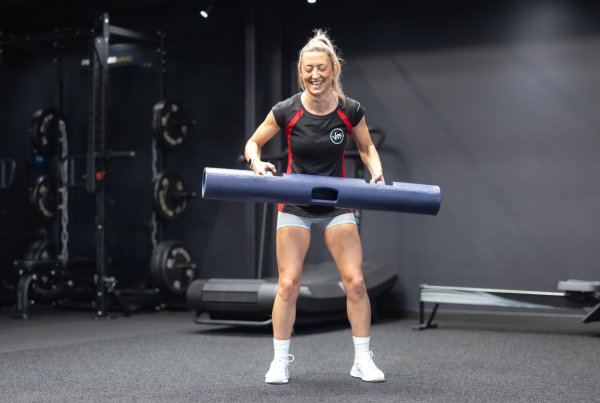


How PTs can establish behaviour change in coaching that really works. David Howatson discusses how to set up agreed accountability at the start of the coaching process.
“I’m leaving you!” is the crushing statement all coaches (and people in love) fear the most. If you are a busy trainer, by the law of averages this is bound to happen at some stage, so don’t beat yourself up. A common reason for the separation is that the client isn’t achieving the goals that they’d set out to achieve, no matter the efforts of the coach. Here is where the blame game starts – the client accuses the coach and the coach accuses the client: “too lazy”, “bored with the routine”, “horrible exercises”, “didn’t follow the plan!” etcetera and so forth until both parties are at breaking point.
This awkward exchange is due, in part, to the client thinking the trainer is the one in charge and it’s entirely plausible the coach might have given them that impression. In many cases, this is avoidable if we set up some agreed accountability at the start of the coaching process. How often have you said the line “Here’s what I can do for you …” right away? Off to a bad start, folks.
Who’s responsible for this?!
At the outset of any relationship, the practitioner should make it clear that the client is the custodian of their own health. Outlining the responsibilities of both the individual and the coach is a useful strategy when forming the partnership. This process hits the sweet spot in ethical practice in line with the British Psychological Society’s core principles of respect, competence, responsibility and integrity1. While you might not be a therapist, adopting these principles in service of your clients is wise. Creating agreed-upon boundaries of accountability and then putting them in writing is a useful first step.
Here is a deliberately simple example of a co-created list I shaped with a client in psychological performance coaching.
Client responsibilities
- Making decisions related to their health and performance
- Setting goals and targets
- Time management
- Co-creation of plans and completing agreed tasks
- Participation
Coach responsibilities
- Maintaining a level of practical and academic knowledge
- Offering structured, evidence-based parameters in support of goal setting and time management
- Offering informed choice related to planning and the co-creation of plans
- Delivery of (and support in) practical sessions, assessment and testing
Clarity in accountability is more likely when responsibilities are identified and agreed upon early. Choices related to the individual’s wellbeing should be informed by the professional; however, the decisions are made by the client. Trying to control those decisions as the coach rarely works. Put simply, autonomy is snuffed out. If the choices are not made by the client, who gets the blame when the programme doesn’t work? The coach … rightly!
Where are you on the accountability spectrum?
When reflecting on your own practices, it’s useful to pinpoint where you sit on the spectrum of accountability. On one side we have controlled accountability, where people comply with instructions, stick to the rules, do what they are told by the coach and do not deviate. Here there’s a 50/50 responsibility if things go sideways – it could be that the client didn’t follow the plan to the letter or it could be that the coach’s system is too rigid and doesn’t work for that individual2.
At the other end is autonomous accountability, where people make their own informed choices and are more accountable for the results. This approach has been shown to have better outcomes in terms of long-term adherence in areas such as addiction, weight management and rehabilitation3. In this case, the client should be the one setting goals, sharing their hopes and aspirations for the future along with how they’ll prioritise their time to achieve these dreams. In the role of coach, our job here is to be a guide in helping focus, scrubbing off the rough edges to make goals as realistic and achievable as possible.

David Howatson presenting at FitPro LIVE 2025
Any coach who dictates a singular action plan or strict methodology is plainly setting the client up to fail. However, the coach is not accountable for participation. They can poke, prod, encourage, text, call and smoke signal to externally motivate but, ultimately, it’s down to the client to show up and do the work. Co-creation helps to fuel the intrinsic motivation necessary for change. Collaboration in programming and action planning encourages agency on the part of the client, allowing them to take ownership of their route to success.
Replace the ‘I’ with ‘we’ and ‘you’ in consultations; otherwise, as the coach, you take on too much responsibility and are instantly more accountable. Think along the lines of “What do you think you can do for you?” as a useful question at the beginning of the process. Listen and allow the client an opportunity to grab the responsibility, autonomy and accountability with both hands.
Sometimes blamers gonna blame but, hopefully, adopting the strategies covered here will aid client retention. To help grow and preserve your client pool further, join me on Sunday 8th February, when I’ll be presenting my first online course of the year with FitPro titled Behaviour Change: Build Habit, Build Value.
Designed to boost client retention, the session aims to give you the tools to help individuals establish, manage and reinforce healthy habits. Each module has been created to provide a roadmap in shaping habitual behaviours from the beginning of the client’s journey. The aim is to add some of the key principles used in both behaviour change and psychological models to the service you currently offer, building short-, mid-, and long-term change in the lives of your clients.
Like to know how to develop your coaching ear? Head over to David’s post on Refining your listening ear on the FitPro blog.
References
- British Psychological Society (2021), Code of Ethics and Conduct. https://doi.org/10.53841/bpsrep.2021.inf94, accessed on 4 December 2025.
- Peteet JR, Witvliet CVO, Evans CS (2022), Accountability and autonomy, Philosophy, Psychiatry, & Psychology, 29(1): 69-71. https://dx.doi.org/10.1353/ppp.2022.0011, accessed on 4 December 2025.
- Oussedik E, Foy CG, Masicampo EJ, Kammrath LK, Anderson RE, Feldman SR (2017), Accountability: a missing construct in models of adherence behaviour and in clinical practice, Patient Preference and Adherence, 11: 1,285-94. https://doi.org/10.2147/PPA.S135895, accessed on 4 December 2025.

David Howatson
David Howatson has over a decade of experience in the fitness industry. He currently delivers education, creates content and presents internationally for Technogym and Power Plate as well as being a member of British Rowing’s Go Row Indoor master trainer team.