

Bring a little mind/body magic into your PT sessions. FitPro’s Aislinn Kelly shares how you can take your PT client through a body scan with a tension-releasing body scan.
You’ll have days when your next PT client walks through the door and straight away you can see they’re experiencing overwhelm or stress from their day – their shoulders may be up around their ears; their jaw clenched; their general energy may be all over the place. Or perhaps life is especially tough for them right now and, while the beasting they get in your classes is helping them to disconnect from their current life situation, their mind is still whirling from the stresses and strains of their week. It would be nice to help them to connect and attune to their body and see if they can release a little bit of this tension, right?
Right. So, have you thought about pulling a new tool out of your bag? I’m talking about a tension release in the structure of a body scan.
What is a body scan?
A body scan is a form of mindfulness meditation that brings attention to your breath and body. It gives you the ability to notice any feelings you’re having in the body that you may usually be too busy to notice – any particular tight spots, for example – and carves out a short period of time for you and your clients to sit in the moment and check in with yourselves. It’s a brilliant way to notice tension in the body and – in this case, although not in the case of all body scans – to try to ease it. You’ll be amazed at how much tension you might be holding in your face, for instance, when you really check in. Releasing that tension feels so good.
How to take your PT client through a body scan
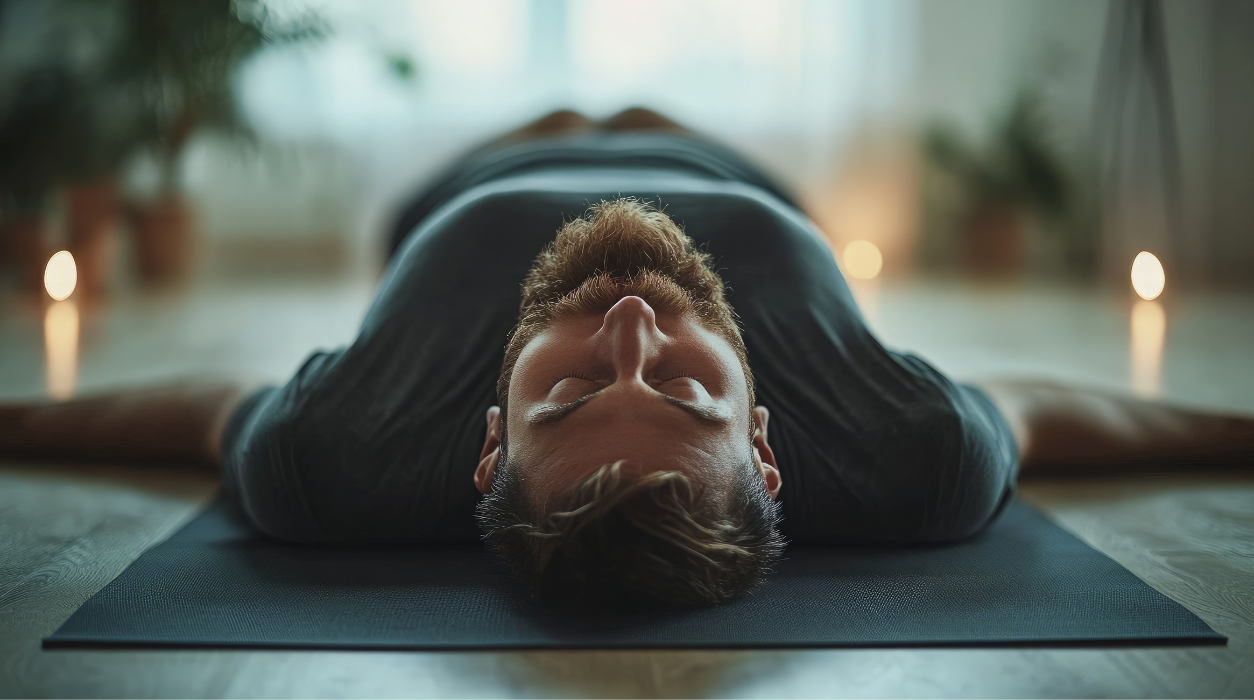
A good way to begin is to ask your clients to get as comfortable as they can be, wherever it is they are resting – they may be lying on a mat on the floor, they may be sitting on a chair, they may be sitting on the floor with their back against the wall. Suggest to them that they feel the floor/chair holding them up, supporting them. We ask them to get as comfortable “as they can be” because, let’s face it, sometimes with the best will in the world lying flat on a yoga mat isn’t the same as snuggling up in bed! We don’t want them to begin thinking about how they’re actually not very comfortable. Instead, we want them to find the point of greatest comfort in the situation and environment they are in.
It doesn’t matter if you’re in a slightly noisy place – we can’t all be tucked up in soundproofed studios. Simply instruct your client that it’s OK to be aware of any sounds around them – these sounds simply remind them to sink a little deeper into the practice. The more times they do this with this in mind, the easier it will be for them to access a peaceful moment in the mind wherever they are. And this is a really useful skill. Say you’re in an airport, a little bit nervous about the flight, it’s super busy and you feel the need to escape. If you can take yourself through a mindfulness practice in a noisy place, then I reckon you’re winning!
So, your client is now as comfortable as they can be. You can invite them to close their eyes if they are comfortable to do so. Now ask them to shift their attention to their breath. They don’t need to change their breath. Just notice it. You may give them cues that help them to really pay attention, such as “Notice whether the air feels cooler on the way in and warmer on the way out” or “feel your lungs and belly expand on the in breath” or “notice the sound your breath makes as it enters the nose”. You can come up with your own cues.
Once you have given your client chance to observe their breath and you notice signs in them that they are beginning to relax (perhaps their face is a little more relaxed or their shoulders aren’t up round their ears anymore), you can begin the scan.
It doesn’t matter whether you start at the head or the feet but, in my experience, people tend to prefer the scan beginning at the head. You can ask them to imagine a tingling feeling on their scalp – kind of like someone is gently brushing their hair (if they have hair!) or giving them a gentle scalp massage. Or you can ask them to imagine a gentle beam of light entering through the top of their head that begins to spread across their scalp.
You might refer to it as a gentle wave of relaxation that begins in the top of the head and slowly spreads. The idea is to introduce a soothing sensation into the top of the head and carry that down through the body. I’m going to go with a tingle of relaxation for the purposes of this example – it’s my personal favourite way to do it.
Ask them to move that tingle of relaxation around their head and scalp and down into their face, into all the little muscles in and around the eyes, easing out any tension they may feel there. Try this yourself – it’s amazing how much tension we hold in our eye area. And move that tingle of relaxation down now to the mouth and jaw, gently easing out all the tensions of the day that they may be holding there.
As you guide them to move their attention down their body in this way, ask them to notice how their body feels in each area. They don’t need to ignore or push away any uncomfortable feelings. Now is the time to notice them and to tune in. To really connect the mind and body in the moment.
So, you will take your clients in this way down the neck; around the shoulders; down into the arms, hands and fingers; back up into the upper back and chest; down into the lower back and tummy; down into the hips and buttocks; down the thighs; around the knees; down the calves and shins; around the ankles and into the feet. Into all of the little muscles in the feet and toes. Even the spaces between the toes. The tops of the feet. The bottoms of the feet. You could even ask them to imagine any tension leaving through the bottoms of the feet.
Once you have moved all the way from the head to the feet, you can bring their attention back to their breath for another few seconds before asking them to shift their awareness to the room and gently coming back into it.
Some tips for delivery
Practise first! By taking yourself – and any willing volunteers – through the process a good few times, you will understand how it feels and what works well. It will also give you an insight into whether you feel it is appropriate with your particular clients. If you have a client who is extremely uncomfortable with their own body image, for example, this may not be an appropriate tool for you to try with this client, as any feelings they already have about their body image may be amplified. Someone with chronic pain may also not thank you for this practice. Use discernment with your own clients.
Some people are tempted to change their voice when they take people through a practice like this. There really is no need. All that happens when you suddenly put on a different voice is that everyone else becomes aware of it and it detracts from the experience. Your own voice is just fine!
What you can do, though, is to slow it down. Don’t rush through it. Pause in your sentences. A great tip I was given by a teacher was to recite or read the next bit in your head before you say it – that gives you the pause you need. So, “Taking your attention to the top of your head now … and I want you to imagine … a tingle of relaxation that slowly begins to spread … across your head and scalp.” Don’t make the pauses massive – just don’t rush it.
Other ways you can help people to relieve tension through a body scan are to ask them to gently squeeze and release any areas of the body where they feel tension. This tends to enable them to let go of the tension more easily if they increase it slightly first.
You might also ask them to visualise a shower head with running water – they can direct that at the areas that feel really tight, like the shoulders, and imagine the water washing the tension away. If you want to really change things up, you could ask them to visualise themselves under a waterfall at the start of the body scan and use the cascading water to wash away the tension. Just remember to ask them if they are OK with water before you lead them in there!
Will you give it a go?
You may be the kind of PT who is high-intensity and cardio busting. But it doesn’t mean you can’t bring a different vibe to the end of the session if you think your client would benefit from it. Why not ask them the question and give it a go?
Find out more about mind/body magic in this FitPro blog post on the rise of somatic practices

Aislinn Kelly
Aislinn Kelly is FitPro’s sub editor and writer, having been in the FitPro team since 2009. Aislinn is also certified in hypnobirthing, mindful baby and me, baby massage and mindfulness meditation teaching. Often, at home, she uses mindfulness meditation to help her small children fall asleep!