

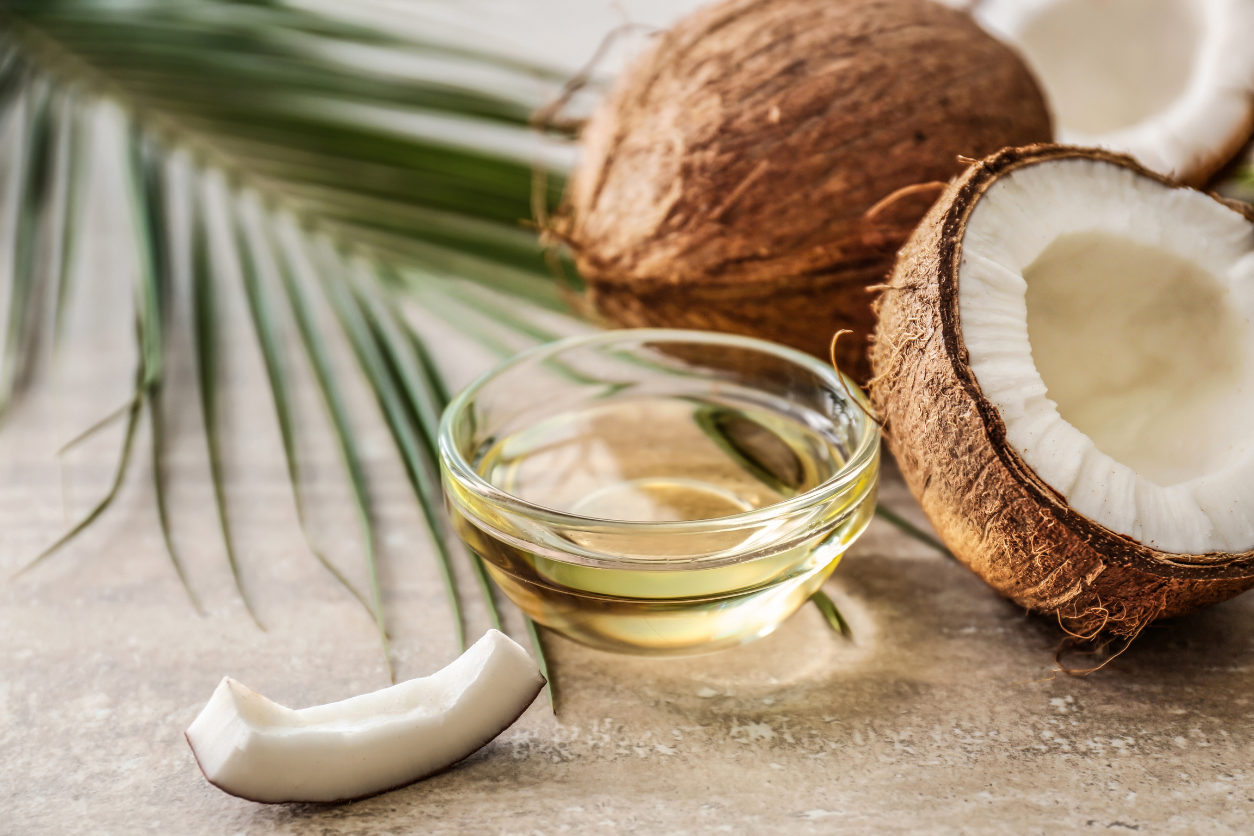
Dr Linia Patel (PhD) explores the chemistry, current research and practical implications of using coconut oil in your kitchen and beyond, with her science-based perspective.
If you want to divide a room, bring up politics – or cooking oils. Among the most hotly debated is coconut oil. Once a pantry staple for the health-conscious and paleo enthusiasts alike, it’s been hailed as a miracle fat for everything from high-heat cooking to fat burning in coffee. But what does the science actually say?
Coconut oil chemistry1,2
One tablespoon of coconut oil (approx. 13g) delivers:
- 116 calories
- 14g total fat, of which 12g are saturated fat
- 0mg cholesterol
- 0mg of salt.
In comparison, one tablespoon of butter contains:
- 105 calories
- 12g total fat, with 7g saturated fat
- 30mg dietary cholesterol
- salt (dependent on if it is salted or not).
These numbers help explain why coconut oil is viewed with scepticism by some health professionals. However, not all saturated fats – or sources – are the same.
Refined vs virgin coconut oil
Refined coconut oil is processed to remove impurities, giving it a neutral flavour and raising its smoke point to around 400°F (204°C). This makes it suitable for higher-heat cooking like stir-fries. Virgin coconut oil is typically cold pressed or centrifuged from fresh coconut flesh. It retains the coconut aroma and flavour but has a slightly lower smoke point (~350°F/175°C). However, keep in mind that there is no regulation of the term ‘virgin coconut oil’ so, theoretically, any oil producer can use these terms. In terms of storage, both versions keep for two years in a dark, cool place and will remain solid at room temperature.
The research: Health effects of coconut oil
Heart health: Cholesterol and cardiovascular risk3,4
High intakes of saturated fats (SFAs) have been shown to raise ‘bad’ cholesterol (LDL-C) and thereby increase cardiovascular risk. However, some studies suggest that saturated fats from plant-based tropical oils like coconut oil might not increase the risk like animal fats. Coconut oil, for example, is rich in saturated fats – mainly lauric acid. An overview of the research is as follows:
- Studies show coconut oil raises both LDL (‘bad’) and HDL (‘good’) cholesterol.
- The increase in HDL is often seen as beneficial, but the rise in LDL may still contribute to cardiovascular risk. It’s still not clear if the increase in ‘bad’ cholesterol is ‘offset’ by the increase in ‘good’ cholesterol.
- When compared to butter, coconut oil performs slightly better in some studies. But when compared to unsaturated oils like olive or rapeseed oil, coconut oil typically fares worse for heart health.
Practical tip: If you’re swapping butter for coconut oil in baking, you may not be improving your cardiovascular risk. But switching from coconut oil to extra virgin olive oil in low-temperature cooking like sautéing could be a heart-smart move.
Fat loss and metabolism5,6
Coconut oil is often marketed for fat loss due to its content of medium-chain triglycerides (MCTs), which are metabolised more quickly than long-chain fats. These fats bypass the lymphatic system and head straight to the liver for energy production and, in theory, are less likely to be stored as body fat.
Coconut oil contains only about 65% actual MCTs, while MCT oil supplements (often used in studies) are much more concentrated than coconut oil. In addition, the studies that have suggested a small but significant fat-loss role have replaced calories with MCTs without exceeding the daily caloric requirement in overweight people.
Practical tip: Adding a teaspoon of coconut oil to your morning coffee won’t hurt but don’t expect it to be a fat-loss game-changer – especially if it’s in addition to, rather than replacing, other calories.
Oral health: Oil pulling and gum inflammation7,8
Oil pulling is a traditional oral health practice in Ayurvedic medicine and is still being used by many people. Plant oils like coconut oil are swished around in the mouth, pulling it through the teeth, which is thought to kill pathogenic bacteria. In one randomised controlled trial, coconut oil significantly reduced ‘bad’ bacteria and inflammatory markers (IL-6 and TNF) in people with moderate gum disease, similarly to an antimicrobial mouthwash after a month of use. However, results are mixed across studies and more research is needed.
Practical tip: If you’re interested in natural oral care, oil pulling with coconut oil for 10 minutes a few times a week may support gum health – but don’t ditch the floss or your dentist.
Take-home message: If you choose to use, use with intention not impulse
Coconut oil isn’t a miracle elixir – but it’s not a poison either. It can be part of a healthy diet but, like all fats, it’s best consumed in moderation. Prioritise oils rich in unsaturated fats – like extra virgin olive oil – for daily use. Use coconut oil sparingly, especially when you need high heat or tropical flavour, not because it’s a magic bullet for fat loss or heart health. If you are managing your cholesterol levels, be cautious.
Explore more of Dr Linia Patel’s science based nutrition blogs; this one discussing emulsifiers and how they impact gut health
References
- Examine.com. Coconut oil. Accessed here: https://examine.com/foods/coconut-oil/?show_conditions=true
- Nutritics Nutritional Analysis Software
- Neelakanton et al (2020), The effect of coconut oil consumption on cardiovascular risk factors: A systematic review and meta-analysis of clinical trials, Circulation, 119.043052
- Unhapipatpong C et al (2021), Tropical oil consumption and cardiovascular disease: An umbrella review of systematic reviews and meta-analyses, Nutrients.
- Coleman H et al (2016), Medium-chain triglycerides and conjugated linoleic acids in beverage form increase satiety and reduce food intake in humans, Nutr Res., 36(6): 526-33.
- Mumme K et al (2015), Effects of medium-chain triglycerides on weight loss and body composition: A meta-analysis of randomized controlled trials, J Acad Nutr Diet., 115(2): 249-263.
- Wolley et al (2020), The effects of oil pulling with coconut oil to improve dental hygiene and oral health: A systematic review, 6(8): e04789.
- Lopez S et al (2025), Anti-inflammatory and anti-microbial efficacy of coconut oil for periodontal pathogens: A triple blind randomized clinical trial, Clin Oral Investig., 14(29)4: 182.