

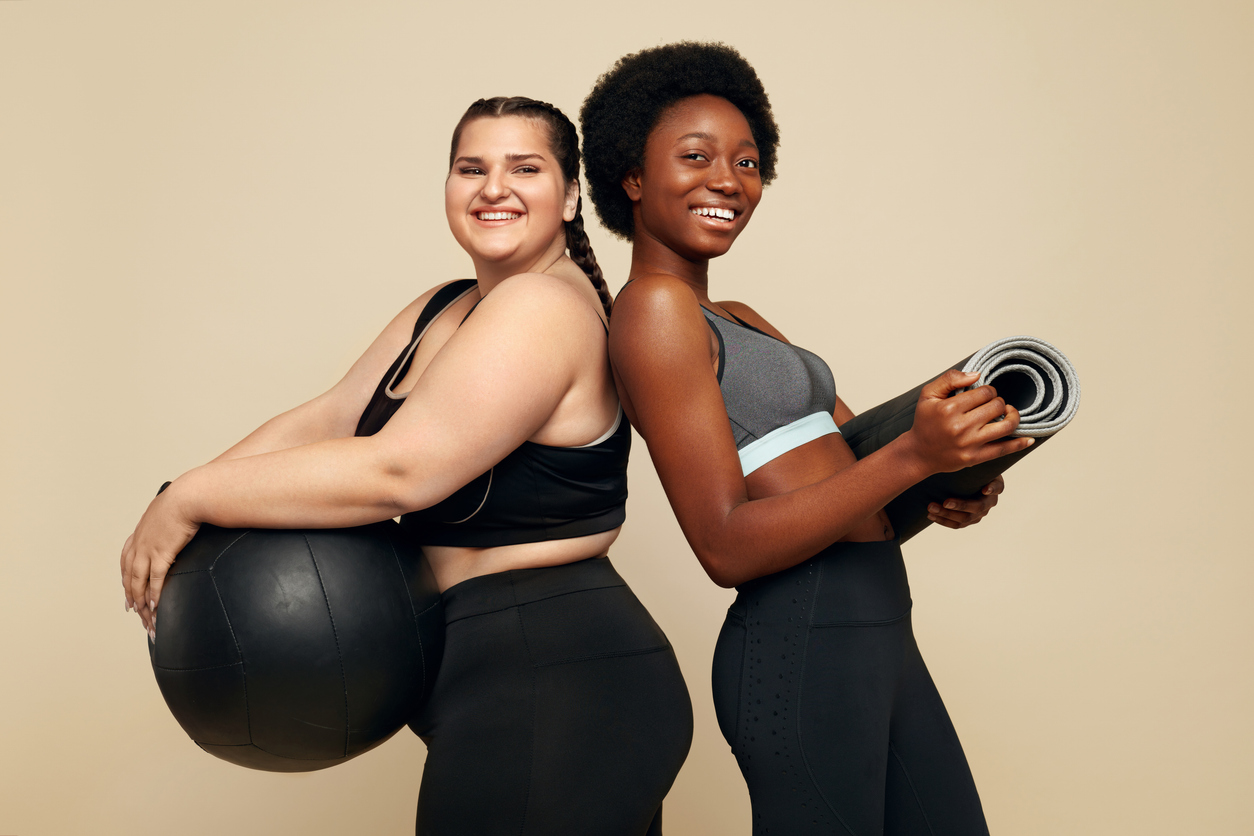
Rhiannon Cooper changed her career, and her life, to build something she wished had existed: Not So Typical Fitness, a neuroinclusive fitness business for people failed by traditional gym culture.
We chat to Rhiannon, who is on a mission to prove that fitness belongs to every body and shares practical ways fitness professionals can build client autonomy into their sessions.
FitPro: Tell us about your journey into fitness and what led you to create Not So Typical Fitness.
Rhiannon Cooper: My journey into fitness wasn’t linear and it certainly wasn’t the kind of inspirational “I found the gym and it changed my life” story the industry loves to tell. I came to fitness after realising I couldn’t remember the last time I had been breathless. Joining a gym made me feel completely out of place in the environment, not seeing myself represented anywhere, and eventually training in a culture that told me my body was a problem to be fixed rather than a strength to be developed.
What I kept noticing, both in my own experience and as I began working with clients, was that the people who needed fitness support the most were the ones being failed the hardest. Neurodivergent people, people in larger bodies, people with anxiety; they’d walk through the gym door and immediately feel like they’d walked into a space that wasn’t built for them. Because it wasn’t. Not So Typical Fitness came from the refusal to accept that as just the way things are.
FP: What does the name ‘Not So Typical Fitness’ mean to you?
RC: It’s a deliberate statement. Everything about traditional fitness culture – the aesthetics, the language, the goals and the environment – are built around a very narrow idea of what fitness looks like, who it’s for and what success means. Not So Typical Fitness exists to disrupt that.
The name signals to potential clients immediately: you don’t have to fit the mould here. For people who’ve spent their lives being told they’re doing things wrong, thinking wrong or looking wrong, that matters enormously. It’s also a statement about my own identity as a trainer. I’m not a typical PT, I don’t run a typical gym business and I refuse to deliver typical fitness experiences that leave half the population behind.
FP: What reactions have you had to your brand?
RC: Two very distinct camps. From the people the brand is built for – people like me three years ago – neurodivergent clients, people who’ve avoided gyms for years and those who’ve felt humiliated in fitness spaces, the reaction is almost always relief because they finally feel seen.
Within parts of the fitness industry, there’s been scepticism; the usual, “But shouldn’t everyone just push harder?” energy. Interestingly, the wider response has shifted significantly. The brand has been featured in The Sun, content I’ve been involved in has reached over 1.7m views on YouTube, I’m speaking at the Mind Body Wisdom Expo in March and I’ve been selected for TEDx Wolverhampton in June. The conversation is moving, even if the industry itself still has a long way to go.
FP: You say you “work with executive function, not against it”. What do you mean by this?
RC: Executive function covers ‘general life skills’, like planning, task initiation, working memory, emotional regulation and managing transitions; all the cognitive processes that make ‘just showing up and getting it done’ far more complicated for many neurodivergent people than fitness culture assumes.
Traditional training approaches often inadvertently punish executive function differences. Long, complex workout plans that require remembering multiple steps. Rigid schedules that don’t account for sensory overwhelm or energy fluctuations. Coaches who interpret missed sessions as laziness rather than dysregulation. Working with executive function means designing sessions and programmes that don’t rely on neurotypical consistency to work. It means breaking things into smaller steps, building in decision points, using written cues alongside verbal ones and creating structures that are flexible by design rather than rigid by default. When you stop fighting how someone’s brain works, you stop losing them.
FP: You also mention “challenging the toxic narratives that fitness belongs only to certain bodies and certain people”. Can you elaborate on that?
RC: The fitness industry has spent decades telling a very specific story: fitness is for people who are already thin, already able bodied, already neurotypical and already motivated in conventional ways. Marketing, media, the gym environment and the language coaches use – it all reinforces who the ‘ideal’ client is. Everyone else is treated as an afterthought, or worse, as someone who needs to change before they deserve to take up space.
The toxic part isn’t just exclusion; it’s the internalised shame that exclusion creates. Clients come to me having been told by previous trainers, or just by the culture, that their body is a problem. That they’re not trying hard enough. That if they just pushed through the sensory overwhelm or the anxiety, they’d be fine. I challenge that directly. Fitness is a right, not a reward for looking a certain way. My job is to dismantle the shame and rebuild something that actually serves the person in front of me.
FP: How do you balance encouraging clients to challenge themselves while respecting their limits and autonomy?
RC: The word I’d use is collaboration. I’m not the expert on my clients; they are. I’m the expert on movement and programming; they’re the expert on their own body, their sensory experience, their capacity on any given day. When those two things work together, that’s where real progress happens.
I build challenge in gradually and always frame it as an invitation rather than a demand. I ask clients to rate things, to tell me what worked and what didn’t. I take that feedback seriously, not as an obstacle to the plan but as information that improves it. The goal is always their goal, defined by them. And crucially, autonomy isn’t just respected in theory, it’s built into the structure of every session.
FP: Can you share experiences clients have had that created gym anxiety?
RC: So many, and they’re heartbreaking because most of them were entirely preventable. I’ve had clients loudly corrected in front of a full gym floor by a trainer who hadn’t considered how public humiliation lands for someone with rejection sensitive dysphoria. Clients have been asked intrusive questions about their weight or medical history in reception, within earshot of others, before their session even began. Clients with sensory processing differences were told to “just focus” when the music, the lighting and the smell of a gym floor were genuinely overwhelming their nervous system.
One client described a previous PT who kept changing the session plan mid-way through without warning. While this might seem minor to a neurotypical person, it sent the client into shutdown because unpredictability felt genuinely threatening. Another was given a 12-week plan on their first session with no onboarding, no check-in on how they process information, just “follow this and we’ll review in three months”. They never came back.
These trainers likely didn’t mean harm. That’s exactly the problem.
FP: What’s the biggest mindset shift fit pros need to make when working with neurodivergent clients?
RC: Moving from “what’s wrong with this client?” to “what’s wrong with my approach?”
When a client doesn’t follow through, shuts down, can’t remember the cue you gave them last week or cancels repeatedly, the default interpretation is often that they’re not committed enough. That’s rarely the truth. The question is whether the programme, the environment and the communication style are accessible to how that person’s brain actually works.
Neurodivergent people are not failed neurotypicals. They’re people whose brains work differently and who need coaches willing to meet them where they are, rather than insisting they meet the coach’s expectations of what a ‘good client’ looks like.
FP: How can fit pros adapt sessions to accommodate sensory requirements and be more inclusive?
RC: Start with an intake process that actually asks. Most PT intake forms ask about injuries and goals, while almost none ask about sensory sensitivities, communication preferences or what a client needs to feel safe. Adding those questions signals immediately that you’re a different kind of trainer.
Practically, this might look like: offering quieter session times for clients who find busy gym floors overwhelming; giving clients the option to review the session plan in advance so there are no surprises; using multiple cueing styles (visual, tactile and verbal) rather than assuming verbal instruction is enough. It might mean being flexible about whether eye contact feels comfortable, or whether a client needs a few minutes of transition time at the start of a session before getting into movement. None of this requires expensive adaptations. Most of it just requires slowing down and asking.
FP: What should trainers focus on learning and what’s the one thing they can do today?
In terms of learning: sensory processing, executive function and how trauma responses show up in physical environments are the three areas that will most transform how a trainer works with neurodivergent clients. Rejection sensitive dysphoria is also worth understanding; it fundamentally changes how you give feedback.
The one thing a trainer can do today? Audit their onboarding. Go through every question you ask new clients and ask yourself whether it gives you the information you need to serve them, or whether it’s just collecting data you were told to collect. Add two questions: “Is there anything about how you process information or your sensory experience I should know?” and “What would make you feel safer in our sessions?” That’s it. The answers will change everything, if you’re wanting to, anyway.
FP: How do you approach cueing and communicating with clients who process information differently?
RC: I don’t default to verbal cueing as the primary method. I treat it as one option among several and find out what works best for each client. Some people are highly visual and respond brilliantly to demonstration or imagery. Some need tactile feedback. Some do better with written instruction they can reference throughout the session. Some need the cue broken into one step at a time rather than given all at once.
I also pay close attention to language. Metaphor-heavy cueing (“imagine you’re pushing the floor away”) can confuse clients who process language literally. I try to be concrete and specific. And I check in regularly, not with “does that make sense?” (because most people will say yes even when it doesn’t) but with “can you show me what you’re going to do?” or “what’s the first thing you’re going to focus on?”
FP: What role does listening play in inclusive coaching and how can trainers get better at it?
RC: Listening is the entire foundation. You cannot create inclusive coaching on top of a coaching relationship where the trainer does most of the talking.
The first thing I’d say to trainers is to get comfortable with silence. Many people, especially neurodivergent people, need more processing time before they respond. If you jump in to fill every pause, you’ll never hear what someone actually wants to say.
Second, listen for what clients don’t say. If someone always says a session was “fine” but their body language suggests otherwise, that’s worth gently exploring. Third, take notes; actually record what clients tell you about their experience, their preferences, their boundaries, and demonstrate that you’ve heard it by bringing those details into future sessions. Being truly heard is rare for a lot of people. When a client realises you genuinely retained what they told you, the trust it builds is extraordinary.
FP: How can trainers create a safe, supportive environment from the very first session?
RC: The first session should be about information-gathering, not performance. A client who has had negative experiences with fitness will arrive with their nervous system already on alert, scanning for the same warning signs that hurt them before. The worst thing you can do is launch straight into training as if rapport and trust are a given.
I spend the first session getting to know someone; their history, their fears, what’s worked, what hasn’t, what they want from this relationship. I let them lead the pace. I explain everything before I do it. I narrate the environment. I check in frequently. And I make it explicitly clear that changing their mind, saying no or asking for something different is not just allowed, it’s encouraged.
Sensory-aware approaches in practice: offer choices wherever possible (music on or off, which area of the gym, what order we do things). Brief the client on what the session will look like so there are no unexpected transitions. Notice signs of overwhelm and have a plan for stepping back that doesn’t feel like failure. Keep the environment as predictable as you can while you’re building trust. Provide a quiet, safe space that the client can always retreat to if overwhelm creeps in.
FP: Is the fitness industry becoming more inclusive? Where is there still work to do?
RC: There’s more conversation about inclusion than there was five years ago, and that matters. Body diversity is more visible in fitness marketing, mental health is discussed more openly and trainers like me are finding audiences that previously had nowhere to go. So yes, things are moving.
But the structural work is lagging behind the rhetoric. Gym equipment is still largely designed for one body type. Fitness qualifications still teach almost nothing about neurodivergence or trauma-informed practice. The diet culture underpinning so much of the industry hasn’t fundamentally shifted. And ‘inclusive’ is still often used as a marketing term by businesses that haven’t actually looked at their own processes to assess whether or not they are indeed inclusive.
The biggest gap I see is in education. Trainers genuinely want to do better but they haven’t been taught how. That’s what drives me to support other fitness professionals too because, if we change how PTs are equipped, the ripple effect is enormous and more people feel able to take up space in the gym.
FP: Can you share a moment or client story that captures why your approach works?
RC: I had a client who came to me after years of avoiding gyms entirely. They’d been publicly humiliated by a trainer years earlier and had internalised the belief that fitness simply wasn’t for someone like them. They were neurodivergent, had significant gym anxiety and told me in our first conversation that they half-expected me to eventually say the same things all the other trainers had said.
We spent weeks just building familiarity, with the environment, with me, with movement, before we did anything that looked like conventional training. I followed their lead entirely. When they had a hard sensory day, we adapted. When they wanted to stop, we stopped.
About four months in, they lifted something they’d been working towards. Not a huge weight by any external measure, but their weight. And what they said afterwards wasn’t about the lift, it was “I finally feel like I belong here.”
That’s the whole thing. That’s why I do this. I believe that health and fitness is about finding strength in who you are and everyone should be able to experience that power.
Like to know explore more about working with neurodiversity? Check out this blog on the FitPro site on Tips from an Autistic ADHD coach.

Rhiannon Cooper
Rhiannon Cooper is founder of Not So Typical Fitness, a personal trainer at JD Gyms Wolverhampton, a size 20 strongwoman competitor and a podcast host, Rhiannon now supports clients across the UK and USA. She has just launched the Not So Typical PT Network for personal trainers who don’t fit the mould either. She has been featured in The Sun and is on a mission to prove that fitness belongs to every body. https://www.notsotypicalfitness.co.uk/