
Magazine References
Jul – Aug 2026
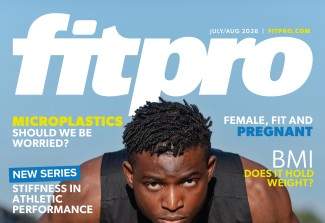
Pg 6 -7 Peak height velocity and maturation in youth athletes
References
- Mills, K., Baker, D., Pacey, V., Wollin, M. & Drew, M.K. (2017) ‘What is the most accurate and reliable methodological approach for predicting peak height velocity in adolescents? A systematic review’, Journal of Science and Medicine in Sport, 20(6), pp. 572–577.
- Rogol, A.D., Clark, P.A. & Roemmich, J.N. (2000) ‘Growth and pubertal development in children and adolescents: effects of diet and physical activity’, The American Journal of Clinical Nutrition, 72(2), pp. 521S–528S.
- Beunen, G.A. & Malina, R.M. (1988) ‘Growth and physical performance relative to the timing of the adolescent spurt’, Exercise and Sport Sciences Reviews, 16(1), pp. 503–540.
- London Bridge Sports Medicine Group (2022) Peak height velocity guide for parents and children. Available at: https://lbsm.co.uk/peak-height-velocity-guide-for-parents-and-children/ (Accessed: 19th May 2026).
- Neinstein, L.S. (ed.) (2008) Adolescent health care: a practical guide. Lippincott Williams & Wilkins.
- Hannaman, A. (2003) ‘Adolescent health care: A practical guide’, Pediatric Emergency Care, 19(2), pp. 131–132.
- Malina, R.M., Reyes, M.E., Figueiredo, A.J., e Silva, M.J., Horta, L., Miller, R., Chamorro, M., Serratosa, L. & Morate, F. (2010) ‘Skeletal age in youth soccer players: implication for age verification’, Clinical Journal of Sport Medicine, 20(6), pp. 469–474.
- Myer, G.D., Faigenbaum, A.D., Ford, K.R., Best, T.M., Bergeron, M.F. & Hewett, T.E. (2011) ‘When to initiate integrative neuromuscular training to reduce sports-related injuries and enhance health in youth?’, Current Sports Medicine Reports, 10(3), pp. 155–166.
- Coelho-e Silva, M.J., Figueiredo, A.J. & Moreira Carvalho, H. & Malina, R.M. (2008) ‘Functional capacities and sport‐specific skills of 14‐ to 15‐year‐old male basketball players: Size and maturity effects’, European Journal of Sport Science, 8(5), pp. 277–285.
- Lloyd, R.S. & Oliver, J.L. (2012) ‘The youth physical development model: A new approach to long-term athletic development’, Strength & Conditioning Journal, 34(3), pp. 61–72.
- Ford, K.R., Myer, G.D. & Hewett, T.E. (2010) ‘Longitudinal effects of maturation on lower extremity joint stiffness in adolescent athletes’, The American Journal of Sports Medicine, 38(9), pp. 1829–1837.
- Rumpf, M.C., Cronin, J.B., Pinder, S.D., Oliver, J. & Hughes, M. (2012) ‘Effect of different training methods on running sprint times in male youth’, Pediatric Exercise Science, 24(2), pp. 170–186.
- Malina, R.M., Bouchard, C. & Bar-Or, O. (2004) Growth, maturation, and physical activity. Human Kinetics.
- Viru, A., Loko, J., Harro, M., Volver, A., Laaneots, L. & Viru, M. (1999) ‘Critical periods in the development of performance capacity during childhood and adolescence’, European Journal of Physical Education, 4(1), pp. 75–119.
- Beunen, G. & Malina, R.M. (2008) ‘Growth and biologic maturation: relevance to athletic performance’, The Young Athlete, 1, pp. 3–17.
- van der Sluis, A., Elferink-Gemser, M.T., Coelho-e-Silva, M.J., Nijboer, J.A., Brink, M.S. & Visscher, C. (2014) ‘Sport injuries aligned to peak height velocity in talented pubertal soccer players’, International Journal of Sports Medicine, 35(04), pp. 351–355.
- Faulkner, R.A., Davison, K.S., Bailey, D.A., Mirwald, R.L. & Baxter-Jones, A.D. (2006) ‘Size‐corrected BMD decreases during peak linear growth: implications for fracture incidence during adolescence’, Journal of Bone and Mineral Research, 21(12), pp. 1864–1870.
- Nicholson, A.D., Sanders, J.O., Liu, R.W. & Cooperman, D.R. (2015) ‘The relationship of calcaneal apophyseal ossification and Sanders hand scores to the timing of peak height velocity in adolescents’, The Bone & Joint Journal, 97(12), pp. 1710–1717.
- Hans, S.D., Sanders, J.O. & Cooperman, D.R. (2008) ‘Using the Sauvegrain method to predict peak height velocity in boys and girls’, Journal of Pediatric Orthopaedics, 28(8), pp. 836–839.
- Busscher, I., Kingma, I., de Bruin, R., Wapstra, F.H., Verkerke, G.J. & Veldhuizen, A.G. (2012) ‘Predicting the peak growth velocity in the individual child: validation of a new growth model’, European Spine Journal, 21(1), pp. 71–76.
- Mirwald, R.L., Baxter-Jones, A.D., Bailey, D.A. & Beunen, G.P. (2002) ‘An assessment of maturity from anthropometric measurements’, Medicine & Science in Sports & Exercise, 34(4), pp. 689–694.
- Malina, R.M. & Kozieł, S.M. (2014) ‘Validation of maturity offset in a longitudinal sample of Polish boys’, Journal of Sports Sciences, 32(5), pp. 424–437.
- Malina, R.M. & Kozieł, S.M. (2014) ‘Validation of maturity offset in a longitudinal sample of Polish girls’, Journal of Sports Sciences, 32(14), pp. 1374–1382.
- Malina, R.M., Kozieł, S.M., Králik, M., Chrzanowska, M. & Suder, A. (2021) ‘Prediction of maturity offset and age at peak height velocity in a longitudinal series of boys and girls’, American Journal of Human Biology, 33(6), e23551.
- Malina, R.M., Coelho-e-Silva, M.J., Martinho, D.V., Sousa-e-Siva, P., Figueiredo, A.J., Cumming, S.P., Králík, M. & Kozieł, S.M. (2021) ‘Observed and predicted ages at peak height velocity in soccer players’, PLOS ONE, 16(7), e0254659.
Pg 8-11 Microplastics: Should we be worried?
References
- Scientific Advice Mechanism to the European Commission (n.d.) A scientific perspective on microplastics in nature and society. Available at: https://scientificadvice.eu/advice/a-scientific-perspective-on-microplastics-in-nature-and-society (Accessed: 29 June 2026).
- Koelmans, A.A. et al. (2019) ‘Microplastics in freshwaters and drinking water: Critical review and assessment of data quality’, Water Research, 155, pp. 410–422.
- Cox, K.D. et al. (2019) ‘Human consumption of microplastics’, Environmental Science & Technology, 53(12), pp. 7068–7074.
- Mahalingaiah, S. et al. (2025) ‘Microplastics and human health’, JAMA, 334(21), pp. 1941–1942.
- Zhao, et al. (2024) ‘The potential toxicity of microplastics on human health’, Science of the Total Environment, 912, p. 168946.
- Fiore, et al. (2026) ‘Microplastics and nanoplastics in the human diet’, Nature Health, 1, pp. 48–57.
- Marfella, R. et al. (2024) ‘Microplastics and nanoplastics in atheromas and cardiovascular events’, New England Journal of Medicine.
- Lang, K. et al. (2026) ‘Microplastics: Do they harm human health?’, BMJ, 392.
- World Health Organization (2022) Dietary and inhalation exposure to nano- and microplastic particles and potential implications for human health. Available at: https://www.who.int/publications/i/item/9789240054608 (Accessed: 29 June 2026).
- Food Standards Agency, Committee on Toxicity (n.d.) Sub-statement on the potential risk(s) from exposure to microplastics: Inhalation route. Available at: https://cot.food.gov.uk/Sub-statement%20on%20the%20potential%20risk%28s%29%20from%20exposure%20to%20microplastics%3A%20Inhalation%20route (Accessed: 29 June 2026).
- Zhang, Z. et al. (2021) ‘Microplastics in the gut: Interactions with gut microbiota and implications for host health’, Environmental Science & Technology, 55(9), pp. 5078–5091.
- Makki, K. et al. (2018) ‘The impact of dietary fibre on gut microbiota in host health and disease’, Cell Host & Microbe, 23(6), pp. 705–715.
- Wang, S. et al. (2025) ‘Association of dietary quality and dietary inflammatory potential with inflammatory markers: Evidence from the National Health and Nutrition Examination Survey 2009–2018’, Frontiers in Immunology, 16, p. 1596806.
Pg 14-17 What is core stabilisation?
References
- Panjabi, M.M. (1992) ‘The stabilizing system of the spine. Part I. Function, dysfunction, adaptation, and enhancement’, Journal of Spinal Disorders, 5, pp. 383–389.
- Panjabi, M.M. (1992) ‘The stabilizing system of the spine. Part II. Neutral zone and instability hypothesis’, Journal of Spinal Disorders, 5, pp. 390–396.
- Zemková, E. and Zapletalová, L. (2022) ‘The role of neuromuscular control of postural and core stability in functional movement and athlete performance’, Frontiers in Physiology, 13, p. 796097.
- Huxel Bliven, K.C. and Anderson, B.E. (2013) ‘Core stability training for injury prevention’, Sports Health, 5(6), pp. 514–522.
- Biering-Sørensen, F. (1984) ‘Physical measurements as risk indicators for low-back trouble over a one-year period’, Spine, 9, pp. 106–119.
- McGill, S.M., Childs, A. and Liebenson, C. (1999) ‘Endurance times for low back stabilization exercises: Clinical targets for testing and training from a normal database’, Archives of Physical Medicine and Rehabilitation, 80, pp. 941–944.
Pg 28-31 Female, fit and pregnant
References
- Faraone, J. & Weis, C.A., 2015. The Athletic Mom-to-be: Training Your Way Into Pregnancy and Motherhood. AuthorHouse, p.31, 58.
- Dion, B. & Dion, S., 2014. The Pregnant Athlete. Da Capo Lifelong Books, p.41.
- Sims, S., 2016. Roar: How to Match Your Food and Fitness to Your Unique Female Physiology for Optimum Performance, Great Health, and a Strong, Lean Body. Rodale Books, pp.63–70.
- Wieloch, N., Alricsson, M. & Bergström, E., 2021. Sport and exercise recommendations for pregnant athletes: a systematic scoping review. BMJ Open Sport & Exercise Medicine, 7, pp.1–12.
- Coulson, M. & Bolitho, S., 2012. Pregnancy and Fitness. Bloomsbury Sport, p.118.
- Theodorsen, N. et al., 2024. Pregnant women may exercise both abdominal and pelvic floor muscles without increasing diastasis recti abdominis: a randomised trial. Journal of Physiotherapy, April.
Pg 32-35 Reactive strength stiffness for performance, part one
Further reading
- Fletcher, I.M. and Maloney, S.J. (n.d.) ‘A coach’s guide to understanding and measuring stiffness. Part 1: Biomechanical concept’, Professional Strength & Conditioning Journal. UK Strength and Conditioning Association.
- Fletcher, I.M. and Maloney, S.J. (n.d.) ‘A coach’s guide to stiffness. Part 2: Recommendations for testing and training’, Professional Strength & Conditioning Journal. UK Strength and Conditioning Association.
- Morin, J.-B. and Samozino, P. (2016) ‘Interpreting power-force-velocity profiles for individualised and specific training’, International Journal of Sports Physiology and Performance.
- Young, W.B., James, R. and Montgomery, I. (2002) ‘Is muscle power related to running speed with changes of direction?’, Journal of Sports Medicine and Physical Fitness.
- Taube, W. et al. (2012) ‘Neuromuscular adaptations to plyometric training’, Sports Medicine.
- Jeffreys, I. (n.d.) ‘The role of acceleration, deceleration and change of direction in athletic performance’, Professional Strength & Conditioning Journal. UK Strength and Conditioning Association.
- McBurnie, A.J. et al. (2022) ‘The biomechanics of acceleration and deceleration in team sports’, Sports Medicine.


